Pages

November 16, 2013

Living That Dream: It's Never Too Late To Get Started!

 Though admittedly unconventional and definitely unpaid, my first writing gig took place at age 5. For reasons I can't recall exactly, I felt that L. Frank Baum could have done better with The Wizard of Oz. So I rewrote it. The whole thing. Then performed it live in my grandparent's living room for any neighbour willing to pay the low, low price of twenty-five cents.

Four people showed up. In my mind, it was a smash hit (after all, a dollar could buy two chocolate bars back then) and my young, brilliantly naive mind raced with visions of future glory as a writer.

For the next decade and a half, I pumped out short stories, essays, radio plays, and comic books with a zest and vigor that would make Stephen King look like a bum. I wrote for the sheer delight of it, for the excitement of creating whole new worlds, making people say and do what I would never dare to do in real life, and seeing where the muse would take me next.

I enlisted friends to play the parts in the plays we recorded. Wrote and produced my first film at age ten. Had stories published in mainstream creative writing journals at age 12. Earned a spot as arts and entertainment editor with Simon Fraser University's student paper, The Peak at 19. Began writing and illustrating my first children's book at 20. There was absolutely no question where my life was headed and I could hardly wait for the book tours to begin!


Flash forward twenty years. I'll spare you the gory details, let's just say life intervened. Financial realities, career detours, marriage, kids, divorce, new financial realities, new detours, etc. If you once had big dreams, then watched time throw up wall after wall between those dreams and you, you know what I'm talking about. I continued to write during those years, as a journalist, blogger, and sometimes creative writer, but it was all very much "on the side" and "in my spare time".

Hopes of becoming a writer professionallyone of those special few who get to do it for a living, receded more fully into the horizon with each passing day. I came to accept that it just wasn't meant to be. That there was nothing wrong with being a really, really good corporate HR specialist in the oil and gas industry. And that somehow, I would find a way to die happy, despite knowing I had never accomplished my life's passion and soul's purpose.

And then I woke up, handed in my recruiter's cap, and went to film school. I was 41.

It's never too late.

Hey, I wasn't stupid about it. I assessed the risks, counted the costs, sought advice, deliberated, and agonized. I even cried a little. I knew there were no guarantees I'd pop out the other end of Vancouver Film School's writing program into an executive's chair at NBC. But I didn't care, because it was quite simply time. Time to finally do what I'd always wanted to do.

As you get older, the choice becomes relatively straightforward: Either you go after what you love or you find a way not to love it anymore. It's the only way to silence those crazy, incessant voices inside your head. When you're twenty, you still have the luxury of time, of weighing options, of apparently infinite trial runs, of thinking your opportunities are always and forever ahead of you. When you're twice that age, desperation moves in and becomes a more or less permanent roommate, quiet and respectful at first, then gradually leaving socks everywhere and constantly cranking the stereo to ten.

Sometimes, desperation is a good thing. It was for me. It drove me to finally become a paid, professional writer.

I'm not making millions (yet), I'm not even doing it full-time (working at it), but for the first time in years, I'm doing what I was born to do. More than that, I've proven to myself that all the excuses I use to dole out about how my dreams had moved beyond reach were simply the things good people tell themselves to try and feel better about allowing their dreams to slip away. (P.S. If you're a parent, prone to spouting off about how important it is for your kids to follow their dreams, be prepared for them to serve you your own words for lunch one day if you don't eventually follow yours!)

Crazy voices abound, particularly the aforementioned ones in your own brain. Once you make the decision to chase after your dreams, the voice that shouts "It's too late!" is replaced by the one that screams "You're gonna fail!" Just voices, that's all. And because they're in your head, don't forget you are at liberty to tell them to shut the hell up.

Still think it's too late? That you're too old? That opportunity has passed you by?

Check it out:

Andrea Bocelli waited till age 34 to trade in his lawyer's briefcase for life as a world-class singer.

Julia Child enrolled in cooking school at 36.

Phyllis Diller began her stand-up comedy career at 37.

John Mahoney, Kelsey Grammer's father on Frasier, got into acting at 37.

Stan Lee was 43 when he began crafting superheros, and Fantastic Four partner Jack Kirby was 44.

Charles Darwin was 50 when he finally converted his life's work into On The Origin of Species.


Laura Ingalls Wilder started as a newspaper columnist in her 40's and didn't get down to business with Little House on the Prairie until her 60's!

Colonel Sanders was 65 when he began selling chicken with eleven herbs and spices.

Frank McCourt was 66 when his breakthrough novel, Angela's Ashes became an international hit. His next two books were written at ages 69 and 74.

Grandma Moses took up painting later in life when arthritis ended her embroidering career. She was 80 when her first solo exhibit won rave national reviews. At her death (she was 101), she had over 1,600 paintings under her belt.

It's never too late!

October 15, 2013

In Memory of My Incessant Cheerleader, Auntie Barb

I was eight years old when I decided I wanted to be just like my Auntie Barb. At the time, she was the lead singer of the Vancouver band, Broadway. (My dad was the guitar player.) I remember because I had painstakingly learned all the words to Bonnie Tyler's "It's A Heartache" and was invited by my aunt at the last minute to get up and sing it at Vancouver's Kejack's nightclub where Broadway was playing that evening.

It was the Spring of 1979 and totally normal for an eight year-old to be sitting at a bar at ten o'clock on a Friday night, so long as he was related to a member of the band.

I had never felt such an intoxicating mixture of electric superstar excitement and run-for-the-hills terror. But with her unquestionable faith in my ability to knock it out of the park, and her knack for working a crowd, I took control of my bladder, jumped down from my stool, and made my way to the stage.

When I was done, I received a standing ovation and a bowl of spumone ice cream on the house.

My life changed that night. In ways I couldn't have foreseen at the time, music would now somehow be a part of my life forever. All because she had faith in me when I didn't have it in myself. Because she saw a golden opportunity where my limited imagination was only able to detect failure and embarrassment.

Every eight year-old should be so lucky.

For the next thirty-five years, Barb stood behind every single creative endeavour I pursued without the faintest whiff of doubt that I would succeed. Every band I played in, every song I wrote, every novel or script idea I came up with, every film I scored music for. Not oblivious to the fact that every aunt believes her nephew was delivered directly from the gods, I also sought the unbiased feedback of professionals to my creative work, just in case. Meanwhile, she continued to listen, to stand in awe and smile, to assure me with a zealot's belief that I could do anything - absolutely anything - I put my mind to.

A faith that extended beyond my art to my relationships, my parenting, my work life, and. . .well, pretty much everything else.

Don't get me wrong, she was no Pollyanna. She wasn't afraid to tell me when she thought I was spinning my wheels, wasting my time, squandering my opportunities, or generally full of shit. But in all things and at all times, she was my tireless cheerleader. The sun in my life that simply never, ever went down.

Until October 12, 2013 when at age 60, she ended her battle with cancer and sank into a sweet sleep.

It's funny how life smacks us in the head sometimes and gets us back in the driver's seat. For the past year, I've drifted in and out of what I'm assuming is the mid-life crisis I was certain I had avoided when I turned 40. A period of intense introspection, anxiety, and self-doubt my older friends keep telling me is "perfectly natural" (though, I might add, "completely unwelcome") when you suddenly realize you've got as many years behind you as you do ahead. What am I doing with my life, what difference will I have made, and all that stuff. I've got to admit, it's left me more than a little unhinged at times.

But as I looked into my auntie's face for the last time in the dimly-lit silence of her hospice room, I suddenly remembered that night in 1979. I remembered her stepping down from the stage in the middle of her set and taking my trembling, eight year-old hand. I remembered her prepping the audience, assuring them that this next number was going to blow their minds. I remembered her smiling from ear to ear when it was all over, clapping and cheering wildly.

And as I stood to leave her room for the last time, I blew my cheerleader a final kiss and made her a promise: I would never let fear stop me from doing anything. Ever. Till the day I died.

Love you, Auntie Barb.

September 5, 2013

Orillia Gears Up For First Annual Film Festival

Visit the O.F.F. website for more details.
ORILLIA, Ontario - Local ophthalmologist Tim Hillson not only has an eye for film, he knows a good opportunity when he sees one. Why else would he take upon himself the mammoth task of orchestrating the famous town's first annual film festival?

"I've always loved film," says Hillson. "Watching my kids and others enjoy making their own movies, I started to see how much more accessible film-making is with the explosion of new and affordable technology that allows the user to share their creativity in a really appealing way. And I thought it would be a great thing to have something that puts that creativity on show in our city."

Hillson's plan looked fairly straight-forward on paper: Make a national call for short film entries, show the selections over the course of an evening, and hand out prizes to the best ones. Sounds easy if you say it fast enough. But anyone who has worked TIFF, VIFF, or any of Canada's other notable annual festivals knows that running an event like this is anything but easy, never mind starting one from scratch.

"You know it wasn't as hard as I thought it would be," says Hillson, no stranger to building a business from the ground up.  "I looked at some other communities doing something similar and how they were doing it. I shamelessly cut and paste good language from other websites when I found it.  I reserved the website name, created a non-profit corporation, then broke the tasks down. Getting sponsors, getting volunteers, getting submissions, getting an audience. After that, it was really just grunt work."

Grunt work that included sending letters to film schools across the country. Soliciting volunteer workers from local high schools. Tapping the synergistic advertising might of Facebook, Twitter, and Withoutabox. Blanketing the area with posters and post cards. And perhaps most significantly, securing Orillia's gorgeous Opera House as the festival's venue.

"We wanted to say right off the bat, 'this is going to be great' to our potential audience," Hillson continues. "I think if we had picked a budget venue it would have cut the interest significantly. Once I put the deposit down, I knew it was going to actually happen!"

Orillia, made famous in Stephen Leacock's Sunshine Sketches of a Little Town (under the fictional town moniker "Mariposa"), attracts tens of thousands of tourists each year, due largely to its breathtaking waterfront views, groovy arts milieu, and annual Mariposa Folk Festival which has hosted greats like Bob Dylan, Neil Young, Joni Mitchell, Leonard Cohen, The Proclaimers, Blue Rodeo, Barenaked Ladies, and of course hometown boy and legendary songsmith, Gordon Lightfoot.

Culturally vibrant and scenically nestled between Lake Couchiching and Lake Simcoe, this town is, in other words, the perfect place to hold a film festival.

"I think Orillia is ready for this," says Hillson proudly. "We already have a strong arts community and a long history of artistic leanings. Orillia as a city has an open mind to new things and I think this could really take off."

So far, the community response has been overwhelmingly positive.

"Finding sponsors for the festival has been remarkably easy.  I took the old 'ask a thousand people and ten will say yes' approach but the ratio has been much better than that.  The medical community has stepped up, as has the city and a number of businesses.  We even have some big software company sponsors which has been great!"

In the hands of Hillson and team, and with strong local support, things are sizing up nicely for one heck of an evening. But the good doctor's vision extends well beyond October 4.

"In the years to come, I'd love to see the Orillia Film Festival as a multi-day festival with shorts and full length films and maybe a 48 hour film challenge component that takes over Orillia for a few days.  We also have a partnership with Lakehead University that I would really like to see developed into a summer film camp or maybe even a film school.  Orillia is a great place to shoot a film. The sky's the limit, really."

For more information, visit the official Orillia Film Festival website.

August 17, 2013

Happy Anniversary, Fellow VFS Writing Comrades!

A year ago today, I and my fellow writing students at Vancouver Film School donned our Golden Bagels (you had to be there) and ventured out into the sunset to see what opportunities and fortunes awaited.

At the time, we were frankly glad just to be done and to get on with our lives as, well, whatever we'd end up becoming after insane months of perpetual scribbling. But we also knew that we had just experienced one of the greatest years of our lives and met some of the most intelligent and enjoyable people we'd ever know.

Sap that I am, I can't help but get a little emotional looking back. Wishing I could sit in that lecture theatre, listen to our teachers wax eloquent (or even not so eloquent), take part in a workshop - heck, just stand in line ordering a coffee and commiserating about an assignment! - one more time. I know we're supposed to move on and it looks like we've all done a pretty good job of that. I just miss it sometimes, dagnabbit!

A few of my personal highlights from that golden (bagel) year:

1. Sitting in the back corner during lecture with Jeff McEnery, Mike Reimer, et al, making fun of, well, everybody.

2. Kat Montagu telling us what's what in the movie biz, complete with powerful personal affirmations and four-letter words.

3. Fighting over fourth-floor laptops.

4. Paul Jensen and John Meadows exchanging gleeful, Parkinsonian cackles over their favourite films.

5. "Uncle" Rodger Cove, suave and sagacious, sitting cross-legged and explaining how story works.

6. Listening to Michael Baser celebrate the golden age of television while reminding us that L.A. is full of sweethearts and douchebags.

7. Steve, Bobby, and Dionne (our trusty TAs) popping into lecture like whack-a-moles with the latest school announcement.

8. Erik Jovanovic's multitudinous last words.

9. Having my work disemboweled, dissected, reconstituted, and revived with fresh, new hope in workshop. (Whether or not it felt like it at the time!)

10. Homework over VFS Cafe quesadillas. (They weren't great but somehow they taste good in my head today.)

11. The total lack of leg room in the theatre. (Like the quesadillas, it somehow warms my heart in hindsight.)

12. We got to watch movies nearly every day for a whole damn year! (My body still aches from all the pinches I gave myself. Keep your comments to yourself, Mr. McEnery.)

13. Walking home at the end of each school day feeling like a million bucks, like my life had real purpose, and that I was becoming a real writer!

For the rest of my days, I'll look back at that year as one of the most satisfying, most profound, most personally enriching and kick-assest of my life. The last year hasn't panned out exactly as I'd hoped, but it has been full of great surprises and opportunities I could never have anticipated. And if I ever wonder if it was worth it, I only have to think back to those days when I was making a fortune in the Alberta oil fields but feeling utterly soulless, and realize I'd still be sitting on my dreams had I never taken the plunge and made that phone call to VFS. That's one move I will never regret.

Congratulations, my brothers and sisters in arms. We made it and still very much on our way to bigger and better things!

August 2, 2013

The Shaka Zulu Project: How Great Stories Come Together

In the 19th century, one man changed the face of South Africa forever: Shaka Zulu. Combining innovative battle strategies, brutal military training, and a complete top-down reorganization of Zulu society, he united the fractured tribes of the vast region in a manner that rivaled the campaigns of William Wallace and Alexander the Great. 

But was Shaka a hero or a villain? It is a question that continues to embroil historians, with cultural ripples that alternately inspire and haunt South Africans to this very day.

In July 2012, new South African producer and fellow VFS student Alfred Ngubane invited me to write the script for a comic book, tentatively titled The Shaka Zulu Project, that would serve as his final assignment in the Entertainment Business Management (EBM) program. The plan was simple: complete one, eight-page "proof of concept" issue with a story centered around a key historical battle and Shaka's subsequent rise to power. Alfred would secure the artist. My job was to write the script based on a concept he had developed. He would take it from there.

Having seen the 1986 mini-series, I was as familiar with Shaka's history as television could make me. In other words, I had a lot of research to do. I accepted and we met in the first of a series of meetings that would transport us back in time, halfway around the world, and into a story that remains a hot topic of African debate.

Two months and several revisions later, I delivered the goods and neurotically waited to see would come of it. We writers, you see, worry about whether our stories will be faithfully - heck, even intelligently - translated, or whether they'll be butchered and Frankensteined into monstrosities utterly unlike what we original thunk up. No offense to Mr. Ngubane, but I've worked with a number of producers and directors who talk big and deliver small or who simply don't get story, even when the original idea is their own.

When Alfred handed me the final product, I was elated. Angel Rams Figueroa's artwork was fantastic, the packaging on par with anything I'd find at the comic store down the road, and most amazingly, the story was fully intact, exactly as I'd written it. Not that I would have been offended if he had made a few alterations to clear things up. A writer has to expect that now and again, almost always in fact. But in the case of Shaka Zulu, the original vision and story design had managed to travel right through to the end and culminate in a final product that was deeply gratifying.

How did we pull it off? How did a "good idea" that could have stagnated  in a jar somewhere actually come to fruition?

I attribute our success to at least five factors:

1. A good leader with a clear vision. Alfred knew exactly what he wanted to execute, conceptually and product-wise. He knew what needed to get done. If he didn't, he called on a network of strategically-chosen resources to help out, whether VFS teachers, family, academic experts or connections back home. He was culturally connected to the story and therefore both passionate and "in the know" about his subject - always a good idea. He organized his affairs via action items, milestones and deadlines. He communicated regularly with his team. He was decisive without being dogmatic, remaining open at all times to our ideas and to story changes necessitated by new research. He was (and continues to be) the consummate team leader.

2. A riveting story. No spoilers here. Suffice to say, you're gonna love it! I will say, however, that we spent a lot of hours making sure it appealed to as a broad an audience as possible, whether or not readers have any previous knowledge of the events covered. Love, betrayal, revenge, redemption, blood and guts, sex - it's all there.

3. Lots of research. "Have you heard the one about the South African producer who gets a Canadian who has never been to Africa to write a story about a Zulu king?" As previously confessed, I knew next to nothing about Shaka's story or about South African history in general. Nothing wrong with that, writers venture into unfamiliar subjects all the time. That's what research is for, especially when accuracy and cultural sensitivity are non-negotiable. So for a long time, I sat at Alfred's feet and listened. And read. And Googled. And trolled bookstores when I exhausted my online resources. And fact-checked. And cross-referenced. And revised as new information came to light. It hasn't stopped. And I suspect it never will.

4. A disciplined writing process. Alfred and I met regularly to discuss, share research, review, edit, and celebrate our progress. We started by discussing major story objectives then drew up an outline that we systematically and aggressively massaged until we were comfortable moving forward. Then I went to pages with Alfred periodically checking in to see where things were at until the fat lady finished singing. If ever I needed proof that "two is better than one" and that accountability is the mother of progress, this was Exhibit A.

5. A positive writer-producer relationship. From the beginning, Alfred graciously invited me to absorb and participate in his vision, allowing me to share my thoughts, ideas and opinions without censoring or shutting me down. He may not have always agreed and he was clear about what he wanted to stay put in the story, but he always listened. And I reciprocated. Don't get me wrong, we're a couple of opinionated guys with healthy egos. We couldn't move this rock up the mountain otherwise. But somehow our love for the story, our commitment to its faithful execution, and our interpersonal chemistry combined to make the whole thing a pleasure rather than a pain. A relationship like this is not always possible, so if you're lucky enough to find yourself in the middle of one, cherish it!

Alfred Ngubane with Professor Jabulani S. Maphalala 
As it turned out, Alfred had bigger plans for Shaka than a mere ten pages. Last month, after several weeks of further development, I handed off the script for episode two, a 32-page whopper that will contribute to a ten-part graphic novel the man plans to publish and distribute worldwide in the near future. As I type this, I'm currently working on episode three.

It all began with one person, one big idea, and most importantly, the commitment and work ethic to carry it through to the end. The rest was blood, sweat and teamwork.

Si-gi-di!

Follow our progress on The Shaka Zulu Project Facebook page or at www.ShakaZuluProject.com.

June 24, 2013

My Top 60 All-Time Favourite Screenwriters

Too often overlooked, without a writer you simply have no story. No movie. Nada.

These are my personal choices, based on:
  • Originality of concept and characters 
  • Strength of story elements (characters, dialogue, plot, arc, tone, overall structure)
  • Coherence and effectiveness in storytelling
  • The writer's influence on other writers, filmmakers, and society
  • The sheer pleasure I got watching their films, critics and box office be damned!
Whether a co-writer, adapting another writer's work, or making it all up by themselves, I pay homage to the incredible contributions that this hardworking, hair-pulling bunch has made, and the life-changing moments we've enjoyed as a result. 

The movies listed are the ones I love most. Enjoy! 

1. Woody Allen
Where to begin and where to end? No other writer has shaped both my writing and my life like Woody. Vicky, Cristina, Barcelona, Annie Hall, Manhattan, Hannah and Her Sisters, Crimes and Misdemeanors, The Purple Rose of Cairo, Zelig, Midnight in Paris and 2013's Blue Jasmine.

2. David Mamet
Then this guy, who gives Woody a run for his money. So to speak. The Verdict, Glengarry Glen Ross, Wag the Dog, The Postman Always Rings Twice, The Untouchables

3. Francis Ford Coppola
Patton, The Godfather, The Godfather Part II, The Conversation, Apocalypse Now

4. Oliver Stone
Midnight Express, Scarface, Platoon, Wall Street, Born on the Fourth of July, JFK

5. Martin Scorsese
Mean Streets, Goodfellas, The Age of Innocence, Casino

6. Robert Towne
Chinatown, The Last Detail, Frantic, Mission Impossible, The Firm, Tequilla Sunrise

7. Quentin Tarantino
Reservoir Dogs, Pulp Fiction, Kill Bill, From Dusk Till Dawn, Natural Born Killers, Jackie Brown, Inglorious Basterds, Django Unchained

8. Steven Zaillian
Schindler’s List, Gangs of New York, Awakenings, Clear and Present Danger, Searching for Bobby Fischer, Hannibal, American Gangster, The Girl With The Dragon Tattoo, Moneyball, A Civil Action

9. Charlie Kaufman
Eternal Sunshine of the Spotless Mind, Confessions of a Dangerous Mind, Adaptation, Being John Malkovich, The Dana Carvey Show

10. Paddy Chayefsky
Network, Marty, Altered States

11. Billy Wilder
Double Indemnity, The Lost Weekend, Sunset Boulevard, Some Like It Hot, The Apartment

12. Joel & Ethan Coen
Fargo, Raising Arizona, No Country For Old Men, Paris Je T’aime, The Big Lebowski, The Hudsucker Proxy, Blood Simple, Barton Fink, Burn After Reading, True Grit, O Brother Where Art Thou?

13. Tennessee Williams
Cat on a Hot Tin Roof, A Streetcar Named Desire, The Glass Menagerie, The Night of the Iguana

14. William Goldman
Butch Cassidy and the Sundance Kid, All the President’s Men, A Bridge Too Far The Princess Bride, Misery. (Plus a gazillion others "uncredited"!)

15. Paul Schrader
Taxi Driver, American Gigolo, Raging Bull, The Last Temptation of Christ, Affliction

16. Robert Benton
Bonnie and Clyde, Superman, Kramer vs. Kramer, Places in the Heart, Nobody’s Fool

17. James L. Brooks
Broadcast News, As Good As It Gets, The Simpsons (TV), Rhoda (TV), Mary Tyler Moore, (TV), Taxi (TV), 

18. John Logan
Gladiator, The Aviator, The Last Samurai, Sweeney Todd, Rango, Hugo, Skyfall

19. Christopher Nolan
Batman Begins, The Dark Night, Inception, Memento

20. Kevin Smith
Clerks, Chasing Amy, Dogma, Jay & Silent Bob Strike Back, Red State

21. Nora Ephron
Sleepless in Seattle?, When Harry Met Sally, Silkwood

22. Christopher Guest
Saturday Night Live (TV), This is Spinal Tap, Best in Show, A Mighty Wind

23. Robert Bolt
Lawrence of Arabia, Dr. Zhivago

24. George Lucas
Star Wars, American Grafitti, THX 1138, Raiders of the Lost Ark (story)

25. John Carpenter
Halloween, Assault on Precinct 13, Escape From New York, The Fog, Prince of Darkness

26. Wes Craven
Paris Je T’aime, The Last House on the Left, The Hills Have Eyes, A Nightmare on Elm Street

27. Harold Ramis
Groundhog Day, Bedazzled, Animal House, Caddyshack, Stripes, Ghostbusters, Meatballs, Analyze This, SCTV (TV)

28. James Cameron
Terminator 2, Titanic, The Abyss, True Lies, Avatar

29. Paul Thomas Anderson
There Will Be Blood, Boogie Nights

30. Tom Stoppard
Brazil, Shakespeare in Love, Empire of the Sun, Rosencrantz and Guildenstern Are Dead, The Russia House, Anna Karenina

31. Sofia Coppola
The Virgin Suicides, Lost in Translation, Marie Antoinette, New York Stories

32. Mel Brooks
Young Frankenstein, Blazing Saddles, The Producers, Spaceballs, Your Show of Shows (TV), Caesar's Hour (TV), Get Smart (TV)

33. Frank Darabont
The Green Mile, The Shawshank Redemption, The Walking Dead, The Adventures of Young Indiana Jones, The Mist, Godzilla

34. Horton Foote
To Kill a Mockingbird, Tender Mercies

35. Judd Apatow
40 Year Old Virgin, Knocked Up, Ben Stiller Show, The Larry Sanders Show, Freaks & Geeks, Pineapple Express

36. Lawrence Kasdan
The Empire Strikes Back, Raiders of the Lost Ark, Body Heat, The Big Chill, Silverado, The Accidental Tourist, Grand Canyon, Wyatt Earp 

37. Cameron Crowe
Fast Times at Ridgemont High, Say Anything Jerry Maguire, Almost Famous


38. Waldo Salt
Midnight Cowboy, Coming Home

39. Larry McMurtry
The Last Picture Show, Brokeback Mountain

40. Mardik Martin
Mean Streets, Raging Bull

41. Wes Anderson
The Royal Tenenbaums, Rushmore, Moonrise Kingdom, Fantastic Mr. Fox, The Life Aquatic with Steve Zissou

42. Terry Gilliam
Brazil, Monty Python and the Holy Grail, Life of Brian, Time Bandits, The Meaning of Life, The Imaginarium of Doctor Parnassus, Monty Python's Flying Circus (TV)

43. Raymond Chandler
The Maltese Falcon, The Big Sleep, The Blue Dahlia

44. David Webb Peebles
Blade Runner, Unforgiven, Hero, Twelve Monkeys

45. Eric Roth
The Insider, Forrest Gump, Suspect, Wolfen, Ali, Munich, The Curious Case of Benjamin Button

46. Steven Gaghan
Traffic, Syriana, American Gothic

47. John Cleese
A Fish Called Wanda, Monty Python and the Holy Grail

48. Sam Raimi
The Evil Dead, Darkman, The Hudsucker Proxy, Drag Me To Hell

49. Peter Jackson
Bad Taste, Meet the Feebles, Heavenly Creatures, The Frighteners, The Lord of the Rings trilogy, King Kong, The Lovely Bones, The Hobbit

50. Alvin Sargent
Ordinary People, Paper Moon

51. Paul Haggis
Million Dollar Baby, Crash

52. Akiva Goldsman
A Time to Kill, A Beautiful Mind, Fringe (TV)

53. Orson Welles
Citizen Kane, Touch of Evil

54. Herman J. Mankiewicz
Citizen Kane

55. Ernest Lehman
The King and I, North by Northwest, West Side Story, The Sound of Music, Who’s Afraid of Virginia Wolfe? 

56. Dan O’Bannon
Alien, Total Recall

57. George A Romero
The Night of the Living Dead

58. Deric Washburn
The Deer Hunter, Silent Running

59. I.A.L. Diamond
Some Like It Hot, The Apartment, Monkey Business

60. Christopher McQuarrie
The Usual Suspects

May 11, 2013

Write Now #4: No Excuses - Start Typing!

After my graduating classmates and I received our diplomas, we hugged, drank, slept in, and eventually went our separate ways.

Some of us formed tight little units that met and made plans for the future, working on film projects and even entering some of them into festivals and competitions. Others preferred to work on projects by themselves, presumably due to personality or the remoteness of their home base. And some of us got a job or two to feed our kids while continuing to write in our "spare time".

And so it is with writers. Some form partnerships. Others work solo. Some have the freedom to write all day. Others get a half-hour at the end of a grueling double shift. Some get to work from their bedroom/home office. Others are stuck in a rig camp up in northern Alberta. Some are single, others married with children. Everyone is different. Our opportunities to sit down undisturbed and knock off a few pages vary widely.

Our excuses, however, are unnvervingly similar. (And trust me, I've used each and every one of them.)

"If only I had more time to write like [insert name here]."

"If only I had connections to the industry like [insert name here] has."

"If only I was rich. Or single. Or not so damn tired all the time. If only I had a mentor, or went to that seminar I keep hearing about, or was part of a workshop group. If only I was more "diverse", a different gender, an ethnic minority, or gay. Or if I just had a more compelling story idea. Gaaa!"

Stop. Here's a basic fact: barring any heroic changes on your part, the vexing set of circumstances in which you find yourself probably won't change that much in the foreseeable future. If you have bills to pay that aren't being covered by mom and dad, you've got to work. If you're in a relationship, your free time and mental energy are at a premium. If you have kids, double (or triple) that. If you live in the middle of nowhere, mentors and fellow writers are rare as rainbows. This is your life. If you lack the ability to change it, accept it.

As nearly as I can see, we have two basic choices in life, with writing or any other dream we're chasing: We can shake a fist at an "unfair" universe and sing our sad songs to an unhappy grave. Or take a breath, assess our real opportunities, be grateful for our first-world problems, and start writing.

No I mean it, start writing.

Why are you still reading this when you could be writing?! 

Between the internet, the night club, endless self-imposed to-do lists and the irreparable harm we're sure fate is doing to us, we can find enough "good" excuses to fill a book. (There, I just gave you story idea. You're welcome.) But the fact is, the only thing stopping us from writing is us.

I want to be a screenwriter, that's my dream. But before I get that big contract, I've got to actually write something. Hollywood isn't knocking (yet), nor will they, probably ever. My success, my connection with industry professionals, my opportunities to write are totally up to me. Which means a lot of hard work and humble pie in the meantime.

Writing is a discipline, a head game, a deep exercise in emotional self-management as story ideas and real life compete for attention. Except in rare situations, no one walks out of film school into a professional writers room or six-figure deal. It takes time to to find your voice, develop the craft, and amass a portfolio of gig-getting work. And that only happens by continuing to write - no matter what it is, no matter how you feel.

My first writing job after film school had nothing to do with film. I was invited to write a script for a graphic novel, so I did. I even got paid for it! My next opportunity was to blog for a social media company, so I did that. Later, I was invited to do script coverage for a production company, so I did that, too. Eventually, I was hired to co-write a script for an Indo-Canadian romantic comedy. That lasted four months before the producer was sidetracked by business matters and put the whole thing on pause, but since I was getting paid for it and gaining invaluable experience in the process, I didn't care.

Meanwhile, I continued to blog here at Reel-Focused. (And then there's that screenplay I started three months ago still sitting on the shelf. Note to self: Make time for your own damned work!) The point is, while only half of the writing I've done since graduation has pertained to the big screen, the important thing is that I haven`t stopped writing. I've kept the sword sharp, the wheels greased, the cheesy metaphors at play. It's important to remember that we're not only writers when we become rich and famous. We're writers right now, developing our skills, getting better, and having fun! It's what we love, it's what we do, it's who we are. At least I hope it is, or why the heck are we doing this to ourselves?

Have I allowed excuses to cause or justify inactivity? Yes. Have I occasionally descended into the basement of self-pity with nothing but a glass of Pinot Gris to comfort me? Of course. (I am a writer, after all.) I'm guessing you have, too. The key is to catch ourselves when that happens, get happy, clear our schedules, and start writing. Immediately.

Geez Louise, are you STILL reading?!

April 28, 2013

They Want Me To Do Script Coverage - Part 2: I Am Your Audience

Ever wonder what happens when you or some other screenwriter sends a script to a production company, brimming with cherished hopes and dreams of seeing it turned into a movie? It gets sent to a schmuck like me, that's what.

Then I, who have no personal investment in your story whatsoever, sit, scrutinize, and set it on fire before making the god-like decision regarding whether it is "to be or not to be" considered for production.

And if that scares you, you can imagine how I feel about my future as a screenwriter!

So much so that, after soundly rejecting three scripts in a row, I called my literary agency's top banana to ask one simple question: "Am I an a**hole?" 

Please understand, the very last thing I want to be is an a**hole. I've spent my whole personal and vocational life trying hard to be decent and kind to people. Greeting them warmly at the front desk, listening to their struggles, comforting them in their afflictions, empowering them as teams on projects. I don't want to trample on people's hard work and urge them to keep their day job. Yet these particular scripts ranged from bad to atrocious, and it was my job to be as clear and specific as possible regarding why. Or how about this: maybe they were neither bad nor atrocious, and I'm just a big fat jerk with impossibly-high standards? (You think these things at two in the morning when you're approaching the midpoint of Soon-To-Be-Rejected-Screenplay #3 and run out of coffee.)

"Fair question," the top banana responds. "I've definitely observed that your analyses tend to be..."

He pauses. I lean in. Here it is, affirmation that I'm too harsh in my criticism, way off the mark in my evaluation criteria, generally unfit for further assignments. I mean, who did I think I was in the first place to sit in judgment on someone else's script? Dammit, I knew I should have worn the blue tie!

"Very thorough and direct," he continues.

"Too thorough?" I inquire. "Too direct?"

"Well, I'd say they're more thorough and direct than others," he says. "But I like that. Let's me know right away whether a story's worth my time. Keep it up!"

Thank God. Because truth be told, I actually love ripping on a bad script! Yeah, I know I just said I hate messing with people's labours of love, which is still true, so let me clarify. Every writer deserves a fair shot, a proper read, and the benefit of the doubt. As human beings trying to do something meaningful with their lives, it is my opinion that they deserve respect simply for putting pen to paper. Whether they'll keep my respect once I get into their pages is entirely up to them.

Because at the end of the day, my job as a story analyst is not primarily to mitigate a writer's insecurities but, as the title suggests, to analyze stories. To determine whether they make sense, are properly constructed, have characters people will care about and follow right to the end, and most importantly, are likely to draw a substantial audience. If they do and if they are, no one is happier than me (well, except maybe for the writer) to shout it from the rooftops and print "recommend" in the top right corner of my review. But if they don't and if they are not, I'm going to be honest and pass that on. That's my job. In the words of Michael Corleone, it's not personal, it's strictly business.

Well, that's not entirely true. Sometimes it is personal. Here's where I come full circle and explain why I love ripping on bad scripts. I'm talking the real stinkers, by the way. Of which, sadly, there are many.

I'm doing this gig for free. That's right, gratis, pro bono, unpaid, on an internship basis. Why, because I'm some starving writer they enlisted off of Craigslist who's that desperate for "experience"? Yes. And also because that's just the way the industry works. There are simply too many of us gosh-darn-grateful types trying to get a foot in the door for agencies and production companies to have to pay us. So when I get your script, the hours I spend poring over it are on my dime.

We're talking 3-6 hours for an average hundred-page script, depending on the condition the story is in. That's time I could have spent with my wife, my kids, going for a run, having a nap, or writing my own script. So if your script wastes my time, I'm going to let you know about it. And you can bet that if it really wastes my time, I'm going to enjoy letting you know about it.

Now, if it seems unprofessional for a reader to get emotional and take a bad script personally, remember this: I represent your (potential) audience. At this very early stage in the script development process, I am the person you're asking to "buy a ticket" to your movie. So you want an emotional response from me! Sure, you want an unimpassioned analysis based on theme, plot, structure, character arcs, marketability, and so forth, and you'll get that. But I promise that you're also going to hear how your story made me feel. And if it left me feeling confused, cheated, or sans payoff, I'm going to make that loud and clear. Which, by the way, is exactly what your audience will do. Except they won't be as constructive and they won't tell you. They'll tell their friends, family members, co-workers, and that guy on the bus who was thinking of checking out your film, but won't now. So forgive me for passing on your script and making clear why. I'm just trying to do you (and everyone else) a favour.

Having said that, it's important for writers to know that "SUCKS" and "AMAZING" are not a professional reader's only choices. Yes, if a script is solid, engaging, and highly marketable, I "recommend" it for development. Conversely, if it is poorly-constructed, confusing, or unlikely to appeal to audiences, I urge the powers-that-be to give it a "pass" and move on. (This is where the vast majority of scripts end up, by the way, not because readers are unconscionable hard-asses but because the world is chock full of unskilled, wannabe-writers. Which should be good news since it means the strong stories will shine forth like stars in the blackness of space!)

There is, however, a third category, and that's the one we call "consider". This is for scripts that have real promise and just need a bit of work before being produced. I want to emphasize that the "consider" category is not intended as a literary safe zone for lazy and passive-aggressive readers to simply dump scripts they can't be bothered to analyze properly. Nor does "consider" necessarily equal "en route to production". However, when applied properly, consideration of a script allows good story ideas to germinate and bloom while giving writers an opportunity to improve their skills and execution.

For the record, I open every script hoping it's going to be great and believing the writer will wow me. Innocent till proven guilty is my motto, even though experience has taught me to be wary. I don't need it to be amazing, wonderful as that would be. I just want it to hook me, surprise me, make sense to me, identify with me, and move me. And, of course, convince me that a lot of other people would pay good money to see it.

By jove, that's it! What studios and production companies are looking for! Stories that:
  • Hook (with a strong opening scene, clear and compelling problem for hero to solve)
  • Surprise (with twists, turns, suspense)
  • Make sense (with a well-constructed, cause-and-effect sequence of events and snappy dialogue) 
  • Identify (with sympathetic and believable characters, real-world problems and situations)
  • Move (the audience's emotions along the hero's embattled journey towards self-discovery)
  • Draw (a large audience) 
When a script does this, it's very likely to be "considered". Which means it's that much closer to getting made. And believe me, producers are looking for scripts worth considering. So do that! Write a script that will surprise, engage and satisfy your reader since he or she is the audience you're hoping will flock to see your work. And for God's sake, polish your script into a second draft, at the very least. If you're not sure how to get it there, take a class, get some feedback, or read a book. John Truby's "The Anatomy of Story" or William Akers' "Your Screenplay Sucks" are great places to start.

Better yet, go become a story analyst. Nothing humbles, focuses and improves your writing faster. God help me if you get hold of one of my scripts some day!

April 4, 2013

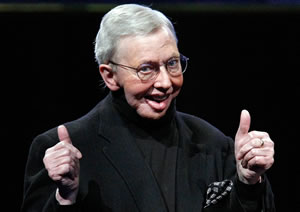
Roger Ebert: Gone But Always "At the Movies"

Whenever someone asks who's most to blame for my obsession (or as I prefer to call it, my "healthy, permanent appreciation") for film and storytelling, I always pin it on Spielberg. Or Lucas. Or any one of a small handful of other magician-filmmakers who blew my mind in the '70s and '80s with visions of aliens and lightsabers and gun-toting archaeologists, and generally helped me survive puberty.

For some reason, though, there's one guy I always forget. I don't know why, considering I've watched, read and enjoyed his work nearly as long as I have theirs, and especially considering how often I've sought his advice over the years regarding what movie I should see tonight. Of course, I'm talking about Chicago Sun-Times film critic Roger Ebert, who passed away today at the age of 70.

I was nine years old when I chanced upon a little TV show on PBS called "Sneak Previews", in which Ebert and Chicago Tribune film critic Gene Siskel exchanged views about recently-released films. Besides the fact that they openly argued and mocked each other's opinions (which I thought was awesome) and yet somehow managed to stay friends (which I found inspiring), I just loved that these two gigantic film nerds dug movies so much and somehow got paid to do it! Sure, they talked a lot about "plot development" and "believable characters" and stuff like that. I didn't have a clue what any of that meant at the time, even though it sounded cool in a dorky sort of way. Mostly, I was just happy in that pre-internet age to get free peeks at new movies while the "bald guy" and the "fat guy" had it out and awarded thumbs up or down.

In the years that followed, I never missed a show, even as it changed names ("At The Movies", "Siskel & Ebert") and even after Siskel's untimely death in 1999 at the age of 53. New critics rotated in and out opposite Ebert until fellow Sun-Times critic Richard Roeper became the new permanent co-host in 2000. I stopped watching shortly after that, but I always consulted his online reviews before spending good money on a film I had questions about. It didn't matter to me that it was only his opinion. Or that I sometimes disagreed. Or that a majority of people think critics are full of shit anyway. Somehow, he almost always got it right.

I think that's because he cared so deeply about film. I mean, really loved it. Lived it, breathed it. He understood what movies were supposed to do and had an uncanny, intuitive sense of whether a film had succeeded in doing it. And he made me love film, too, turning me into the big, blogging, movie dork who sits, hunched, before you today. His passion for film was irresistible and infectious. Like a kid getting to visit a theater for the first time, he never missed an opening, until thyroid cancer and subsequent surgeries began to seriously screw with his life. When he finally returned to the public spotlight during Ebertfest in 2007, he dismissed concerns over the potential reaction to his post-surgery appearance. "So what?" He quipped. "We spend too much time hiding illness."

Well put. Nobody was going to keep this guy away from what he loved. Nobody.

And apparently, no thing.

Not additional surgeries. Not tissue transplants. Not hip fractures, the loss of his voice, facial disfigurement and subsequent prostheses, nor even the constant specter of cancer and death ever-looming. Against the storm, he continued to write, to produce, to make plans, to prepare for the 15th Annual Roger Ebert Film Festival, right up until his April 2 announcement that he would take a brief "leave of presence" before (naturally) returning to work. Now that's passion and dedication; the kind I aspire to achieve in everything I do.

"I know [death] is coming, and I do not fear it," he wrote in 2010. "Because I believe there is nothing on the other side of death to fear. I hope to be spared as much pain as possible on the approach path. I was perfectly content before I was born, and I think of death as the same state. What I am grateful for is the gift of intelligence, and for life, love, wonder, and laughter. You can't say it wasn't interesting. My lifetime's memories are what I have brought home from the trip."

And two days before his death, he blogged: "On this day of reflection I say again, thank you for going on this journey with me. I'll see you at the movies."

Yes you will, Roger.