Pages

April 21, 2016

SchoolCreative Screenwriting Students Didn't Wait For Fate to Decide

Ragini Kapil, Lawrence Davidson, and Maxence Pierrard are students in SchoolCreative’s one-year Writing for Film & Television diploma program. They recently entered their original pilot Kris With No Kitchen into StoryHive’s 2016 Web Series competition.
Prior to their arrival, Ragini was a school principal in Delta, B.C., Lawrence, a restaurant manager in Kamloops, B.C. and Maxence, a film student in France. 
How did you find out about SchoolCreative’s Writing for Film & Television Program?
LAWRENCE: By sheer randomness, I went to a career fair in Kamloops in early 2015, where I was living at the time. My mom told me about it so I went and met [artistic director] Michael Coleman and [admissions advisor] Paul Donnett, and found out about the screenwriting program. The rest is history!
MAXENCE: I was attending a film school in France where I grew up and quickly realized there was going to be very little opportunity to work as a writer or filmmaker there, unless you happened to be both. In France, there is basically no distinction between writers and directors, very few people who make a living just writing. People think there’s a huge film industry in France because of the New Wave of the 60s, but everything on TV and in theatres these days is mostly American. Then I visited Vancouver in April 2015 and loved it. When I went back home, I realized Vancouver was where I needed to be, this was where I was going to build my life as a writer. I looked online and learned about SchoolCreative, and really liked what I saw. So I called and found the admissions team very easy to work with. And here I am!
RAGINI: I was taking part-time Improv classes at Vancouver Acting School [a subsidiary of SchoolCreative] when I was invited to Vancouver’s 2015 FanExpo to hear a panel of successful voice actors who were also teachers at SchoolCreative. At the Expo, I learned about the full-time Writing program and it really appealed to me because I’ve always been a closet writer. As a school principal, however, I didn’t think I could make that commitment. That’s when I met admissions advisor Paul Donnett, who also happened to be a screenwriter and who had left a successful career in the Alberta oil industry to follow his own dream. After talking with him, I turned to the friend I was with and said, “I’m going to leave my job and go to school to become a screenwriter!” It was one of those epic moments where the whole room recedes and you realize you’re making the right decision, and I’ve never looked back. My school district was incredibly understanding when I requested a leave to start what was clearly going to be a whole new chapter in my life.
And since starting your program, you’ve also had opportunity to "star" in a local independent film? 
RAGINI: Three films, actually. Yes, I’m pretty much a background "star" at this point. [Laughs.] That’s actually another huge benefit of being at SchoolCreative. You can take part-time evening classes in scene study, voice acting, and more while in any full-time program. I figure this is my year, this is my one chance to learn and grow and take full advantage of opportunities to work with other writers, actors and other professionals. I want to do it all! I’ve even been able to direct a film. I’ve got a Masters degree and yet I’ve never learned so much in such a short time and in such depth, it’s incredible. In fact, the most depressing days for me are the first or last days of any given month because it’s a reminder that we’re month closer our program ending. I’m just loving it so much.
Why writing?
MAXENCE: When I was younger, I was a graphic artist. I loved creating universes and characters, whole new worlds in which I could share my point of view, make people think, change minds. I was raised by my mother to observe, to look around me and see how people act and react. As a result, I always wanted to bring the human experience into what I did, to explore and discuss how we grow, what happens in this life, what happens after this life. Those kind of things that make people think differently and live differently. That’s my goal. Actually, my experience as a graphic artist helps me in my writing a lot, helping me picture ideas visually and making the writing process easier.
Do you find yourself writing mainly in French or English?
MAXENCE: English. Originally, I was writing in French, but then I had to translate all the time. Now when I have trouble, these guys help me with my expressions and idioms. When they’re not laughing at me, that is.
Come on, they don’t laugh!
LAWRENCE: I definitely laugh at him. [Laughs.]
RAGINI: That’s actually one of the great things about training in Final Draft [writing software]. It allows us to make notes and suggestions in his script, and then Maxence can choose what he wants to do with our input so it still ends up as his work.
MAXENCE: [Laughs.] It helps a lot.
RAGINI: Writing is my passion because I’ve got so many stories I want to tell, so many experiences I want to share. When I was a kid going to school in Vancouver, it wasn’t really a thing to be a creative writer. I would write poetry and letters that would get published in the newspaper, but I didn’t think of pursuing writing as a career because it didn’t seem real to me. There were no classes in creative writing.
There still isn’t a lot of emphasis on creative writing in a lot of schools.
RAGINI: No, it’s not encouraged enough. Even when I took my English Lit degree, I had to defend and justify it to people who said I should get something more “solid”. In fact, even when I started the program at SchoolCreative, I was a bit shy sharing my work in class.
LAWRENCE: It was like pulling teeth, actually. Ragini would say she hadn’t written anything. Then later we found out she’d been quietly writing commercials and jingles and all these things, and we were like, “Why have you been hiding these?”
RAGINI: It’s true! The one thing, though, that made me realize I could actually do this, actually be a writer and a filmmaker, was when I worked with my students to make a commercial for the BC Hydro PowerSmart Challenge and it was aired on TV, then later used for in-school training. That was big.
What about you Lawrence, why writing?
LAWRENCE: I always loved writing. When I was in grade six or seven, my best friend Tamara had a cousin who sent her this really weird short story he wrote. I read it and thought, I could do that, so I did. I wrote a ton of short stories right through high school about me and my friends. But being a professional author didn’t seem practical, so I just assumed this would always just be a hobby. Then I met the people at SchoolCreative who helped me realize that screenwriting could actually be a real career if I was willing to put myself out there and make stuff happen. And making things happen was something I was good at. So I knew this could work.
The support of family and friends tends to plays a big role in people’s decision to pursue a dream. How did your family feel about your choice to become a professional writer?
MAXENCE: My mother and grandparents actually pushed me to come here. I wasn’t sure if we had the money and sort of held back a bit, but my grandparents wanted me to succeed and told me to just go, we’d figure it out. My mother was the same. She was just so happy for me to do something she never had the chance to do. She’d always wanted to be an artist, but when she was young it didn’t seem there were many career options, so she was pressured to go into accounting. That’s why now she encourages me and my sister, who is a professional dancer, to do what we love. It was tough to leave France, for me and for them, but the support of my family and friends has been huge. And I’m so, so grateful for that.
RAGINI: My entire family was super supportive from the start because, in their words, they knew that this was what I was born to do. The school district I work in was very accommodating. This was a big decision for me and they were wonderful about it.
LAWRENCE: My family was really supportive, too. My mom is a bookkeeper and I told her I could go work for her and learn accounting as a trade. But she said, “That’s fine, but you really don’t want to.” Then she heard about SchoolCreative’s program, knew how much I loved writing, and she said, “Go, this is exactly what you want to do.”
How did you three team up to enter StoryHive’s 2016 Web Series competition?
LAWRENCE: It all began in our web series class, taught by award-winning screenwriter Nick Carella. He showed us a bunch of web series and it became clear that this was the wild, wild west, that we could do just about anything we wanted because nobody is holding the keys. So we all wrote our own web series pilot episodes, each unique and different, with a plan for five more episodes. Months later, Maxence shared his opinion that all of our pilots were filmable and why don’t we start a YouTube channel. And after asking a bunch of questions we all said, yeah, let’s do this, and set up our channel, Honey Spot Productions. We shared the idea with the class and with another teacher, Ryan Bright, who saw we had a fairly clear sense of direction and recommended we apply to StoryHive. At first, I was a bit hesitant because it looked like a lot of work. But then we bought in and decided to go for it, starting with “Kris With No Kitchen”. And Ryan, who had pitched and won in last year’s StoryHive, became our mentor, our Gandalf. Another benefit of SchoolCreative, teachers who know the way things work.
How did you find actors and crew for your episode?
LAWRENCE: Yet another benefit of the school! Time was of the essence and frankly, we didn’t have time to go through a lengthy audition process. A friend and student in the Acting Conservatory program, Chantal Morin, had a really great sense of what we were looking for in terms of character and she quickly helped us find our leads, Brett Hudson and Avalon Short, also from the conservatory program. So a win-win for everybody.
RAGINI: Because I used to make movies with my students, I directed. And I have a friend who is an experienced videographer who agreed to come on board with two days notice and had the gear we needed. Between him and Maxence, we had everything set up in time. Plus Lawrence had to move the day before we had to film, and we were out buying a microwave the morning of the shoot, so teamwork was key. Somehow, Lawrence managed to be the epitome of calm through all this, refusing to sweat the small stuff, even when he had to be in character on camera.
LAWRENCE: Yes, but we wouldn’t have eaten if it wasn’t for Ragini! She kept us alive, even while she was directing and making sure things were moving along and looking great.
RAGINI: That’s what has been so great about this, everyone contributing based on their strengths, looking out for one another.
MAXENCE: Then came the editing!
LAWRENCE: Yeah, that was Maxence’s job. I knew he was going to be working for two weeks straight, so I asked how I could help and he said, “Keep me company.” So for two weeks, I fed him and took him for walks. Like Ragini said, looking out for another!
What’s next after StoryHive?
RAGINI: StoryHive is an amazing opportunity and of course we hope we win! But whatever the result, the plan is to keep going, keep writing, keep producing. I hope to work with these guys for years because I know a team as great as this doesn’t come along every day.
What advice would you give to aspiring writers?
RAGINI: Get training. Learn your craft. It’s fantastic to want to tell your story, but learn how to tell it properly. There is an art to it, a craft, and it takes time and discipline to learn it. I have learned so much this year, it’s insane. Learn all you can, too. Take part-time classes in another areas while you’re in the full-time program. This is your year!
MAXENCE: If you love to write, don’t hold yourself back, just go for it. Yes, you may need to take another job while you’re writing, but so what? If you love it, get the training and do it. And find the right people to workshop with, who can give you feedback and help you become a better and better writer. Build a good team.
LAWRENCE: I’ve always believed that other writers are not competition, but rather potential collaborators, potential team members. I come at everything from the angle of, how can I build others up? There’s another filmmaker here at SchoolCreative, Megs Calleja, who has also entered a project in StoryHive called Ask Will. So how can we work together to help promote her project, too? As artists, we’re all in this together, we’re a community. And that extends to our teachers as well. They are our biggest supporters, and we are theirs. This is the team! That’s my philosophy, and I would encourage anyone to approach it the same way.
To find out more about Kris With No Kitchen, check out: https://www.youtube.com/watch?v=PYy54vzYB5w
To find out more about SchoolCreative's one-year diploma programs, click here. 

March 16, 2016

30 Minutes Alone with Montana Norberg

Montana is an actor based in Vancouver with work that includes Lego Star Wars and Urban Jester.

You were Padme in Lego Star Wars. 
I booked Star Wars two and a half years after graduating from acting school. 

Crazy! How did you land that?
That year was crazy for voiceover auditions. I had just auditioned for a Barbie cartoon as well, so when my agent called me, I thought I’d booked Barbie. But it was Star Wars instead. Crazy! I’m a bigger Lego fan than I am a Star Wars fan, so that was a lot of fun. I actually recorded the mp3 for Star Wars in SchoolCreative’s voiceover booths with former fellow student Jeff Todd. That’s why I love that place, we can continue to use the facilities and produce these amazing quality mp3s. 

When did you know you wanted to be an actor?
When I first told my mom I wanted to go to film school, she reminded me of something that happened when I was a kid. I don’t remember it, but apparently she found me behind the TV one day and she asked me what I was doing. I told her I was trying to figure out how to get inside because I wanted to be on TV.

What shows were big for you when you were a kid?
I remember watching the Olsen twins on Full House and thinking, I could do that. I started watching other sitcoms like Friends, which I was probably too young for but I just loved how the characters made people laugh. That was really attractive to me. When I was twelve or thirteen, my sister, her friends and I would stay home on Saturday nights and watch Saturday Night Live, and between commercial breaks, we would re-enact the skits and add our own little improvisational flair. Then we would videotape our own version of American Idol. I’m sure we’d roll our eyes at it now, but we’d watch it months later and laugh our heads off.

Sounds like you started gearing up for a comedy career early.
Well, I grew up in Williams Lake, BC so there wasn’t much else to do! I had a friend with an amazing costume trunk, and we would dress up and do skits. Eventually, I got involved in musical theatre. But being a small town, you never heard of anyone going on to do film or moving to Vancouver to do anything in the arts. Then our family moved to Nelson, which is a really artsy town, but I didn’t really want to move so I kind of shut down my arts interests and focused on soccer instead. By the time I got to high school, I wanted to become a makeup artist. That’s what I originally moved to Vancouver for.

What re-kindled your interest in pursuing an acting career?
When I got to Vancouver, a friend invited me to check it out the acting program he was attending. Honestly, growing up in small towns, I didn’t see acting as a real career option. Especially since most of my experience had been in musical theatre. But I attended an audition class for fun and all of my childhood excitement came flooding back. Being surrounded by the friends I had, it quickly became clear to me that a career in film and television comedy was a real thing and I enrolled at SchoolCreative.

Any big revelations while you were at school?
I fell in love with voiceover work and went pretty hard in that direction after I completed my training. I jumped onto Voice123 online, started putting up mp3s, had some Skype auditions. The first few jobs didn’t pay fantastically, but they were important steps. One of my first gigs was a car dealership radio ad and they paid me $75, and I was like, “What, really? Amazing!” I thought, I’m actually getting paid for this!

That validation early in your career must have been huge.
Totally. That was about three months after I graduated. And I just kept hustling really hard. I got a voiceover agent before film agent, and quickly booked my first cartoon, then a few radio ads. Then along came Padme.

Did booking Star Wars open up other opportunities?
Well, booking any role can open doors, but that was a real a cool booking because I got in the room. And as anyone who’s into voiceover knows, you nerd out on successful voice actors like Tara Strong and others, especially the big Vancouver actors. And suddenly, I’m working with those people. It’s a funny story, on day one, my agent actually drove me to the wrong place for the recording session. But it was great because I wasn’t nervous, I was so preoccupied with just showing up on time. And when I got there, there were twelve people in the room, and they start introducing themselves and I’m thinking, “I know you, I know so much about you!”

Did formal training prepare you in any way to work alongside actors you looked up to?
Absolutely. It gave me the confidence to know I deserved to be in that room. I was working with actors I admired and that I was excited to be with, but the disciplines we learned helped me focus on the fact that we’re all doing the same thing. We’re all working the same show. Don’t get me wrong, you’re still really excited to be doing this, but it turns into a different kind of excitement. You’re confident, you’re prepared, you and know what to do next, rather than just nervously wing it and hope for the best.

Have you got any personal projects on the go that you’re excited about?
I work with a fantastic sketch group called Urban Jester alongside Scott Patey and Ed Witzke, two huge Vancouver talents who also teach at SchoolCreative. About two years after I graduated, even though I had an agent and was booking auditions, I really wanted to do comedy and Scott and Ed knew that. So they invited me to one of their writer’s rooms where I was one of the only girls on the team. In the beginning, I would listen and pitch in. Eventually I threw in my own sketches and had the opportunity to produce one I’d written.

I’ve see Urban Jester on YouTube. It’s really funny!
We’re really proud of it.

What are some of the big challenges you’ve faced as a professional actor?
Well, look at me. I’m a medium-height, medium-weight, brunette woman in her twenties. So there’s a lot of “me” out there. Finding an agent was hard in the beginning. There were times when I was really broke. I went through all the questions and self-doubts about whether the training was worth it or if I’d ever work. I’ve had to schedule my sleep at different times or I just didn’t get any. Same stuff a lot of actors go through.

What kept you going?
I guess I’ve just never loved anything this much. And having busted through those moments, I’m also at a place where I’ve seen my work pay off so it’s much easier to keep going. I believe strongly in self-development as well, and I read a lot of things that move me in that direction.

And now I hear you’re preparing to run a marathon.
When you’re auditioning all the time, it’s easy to think your future is entirely in someone else’s hands – producers, agents, whoever. So I decided to train for the BMO marathon happening this April. I think it’s a great idea to have a hobby that’s not related to your job, which is tough because acting is so fun. But it’s really important to have pursuits that aren’t related to acting, to have friends that aren’t in the business. I love running because it’s just me, it’s just mine. Which is very empowering. It kicks my butt out of bed in the morning, I journal about it. It’s what keeps me sane.

Sounds like your family has played a big role keeping you going.
They’ve been very supportive.  I’m the middle child in a blended family. I think there was a small part of my mom that hoped I would go to university and get a degree. But more than anything, she wanted me to be happy doing something I loved. That’s huge. Sometimes I forget that not everyone’s parents are like that, so I’m very lucky that way.

How important is it to have ongoing support from your teachers and fellow students after you graduate?
I’ve had to battle a lot of doubts, every actor does. Some of the biggest and best support I’ve had has come from my teachers and fellow students, and it started right at the beginning of my training. It’s massive, just how much everyone continues to encourage and believe in one another. To be taught by people who’ve been where you’re at and who know what it’s like to be on hold, to cancel work, to go into auditions, and who can speak based on work they’re doing right now, not just from roles they booked years ago. They get it, they’re living it. And sometimes their support comes in the form of tough love and calling you on your excuses, at least from the teachers I appreciated most. They help keep us focused and accountable. Some schools seem to be all about getting students and their money, but it’s so clear that isn’t their motivation. And that’s everything.

What advice would you give someone who’s thinking about pursuing a career in acting?
Above all, do it! Get training and make the most of being surrounded by like-minded and passionate people, because there’s really no other time in your life that you get that. Look for opportunities, take advantage of them when they come, because they will come. Don’t say no, even though you might think you’re not ready, or it’s not the right time, or you can’t take that job because you have to work. Keep that fire inside you burning!


February 26, 2016

FILM NIGHT Podcast #14 & #15: Oscar 2016

Who should win big at the 2016 Academy Awards?

We know you're just dying to know what we think at the Film Night podcast, so we had to break it into two parts!

Part One

Part Two

February 6, 2016

FILM NIGHT Podcast #13: The Hateful Eight

Listen to me and the boys love-hate on Tarantino at the Film Night podcast!

February 4, 2016

30 Minutes Alone with Dylan Playfair

Dylan Playfair stars in Bell Media/CraveTV's Letterkenny, premiering February 7 right after Superbowl Sunday.

When you get on set, they don’t want an actor who’s still on a huge learning curve.  They want you to walk in with an answer to their problems.  

You’ve had an interesting few weeks!
It’s been crazy. I was supposed to go to Vietnam, so we booked our tickets and were told we could get our visa at the border. But when we got there, the guard didn’t like Canadians I guess, and he wouldn’t let us in.

Really? I thought everybody loves Canadians.
I thought so, too! So we had to stay in Thailand for an extra month. Which was not a bad place to be. I mean, we did a yoga retreat and some elephant riding and I ending up having a really great trip. And now I’m back auditioning in Vancouver, so life is good.

You’re in a new show that’s getting some serious buzz, Letterkenny, premiering February 7 on Bell Media’s CraveTV.
We’ve been incredibly fortunate with Letterkenny. Bell Media had a different show lined up as the first original commissioned program for its digital streaming platform, CraveTV. But an unfortunate turn of events caused that show not to move forward and so they were looking for something to replace it. And there we were, in the right place at the right time. CraveTV liked the concept a lot and decided to put all the production and marketing resources they’d had lined up for that other show into ours. And now they’re doing a big push this weekend during Superbowl Sunday, with the release of all episodes right after the game. Letterkenny is their flagship show, their first original comedy, so they’re really excited about it.

I’ve seen it. I haven’t laughed like that since Trailer Park Boys.
We're pretty proud of it.

You play a hockey player. Is that something you can relate to personally?
Letterkenny is a real “full circle” experience for me. When I was 19, I was playing hockey in Merritt, BC. I love hockey, my dad was a pro coach, my uncle played in the NHL. I had the chance to go pro, had some scholarship opportunities. Hockey treated me really well, I had some great coaches. But I always loved acting, loved the idea of performing. I was watching Friday Night Lights one evening and saw Taylor Kitsch, who coincidentally had played in the hockey same league as me in Langley, BC. So I did some research and found out he’d wrecked his knee and then moved to New York to get into acting. When I learned he had applied the skills and disciplines he’d learned in hockey to acting, I realized I could do it, too.

Have you found that, too? That the things you learned in hockey have helped you as an actor?
Athletes and actors have some important things in common. For instance, both know that the chances of making it big feel like they’re one in a million. A lot of people want to get into sports or acting, but the deciding factor is what you do when people aren’t watching. My dad always told me, you can be skilled as hell but if you don’t work hard, you’re never going to make it. And I wasn’t that skilled as a hockey player but I worked really, really hard, and I got pretty far in hockey.  And I knew that if, like Taylor Kitsch, I applied that same discipline to my acting, I had a good chance of being successful.

What pushed you to take a serious shot at acting?
I had a couple of concussions at 19 that affected me pretty hard. Concussions don’t show up for a while and they can affect you in ways that are spooky.  I would play games and then go home and forget who we’d played or even how I got home. I stopped having fun, stopped loving hockey, stopped going to the rink. And I talked to my dad and he said, “If you don’t love it, get out of the game or eventually you’ll resent it.”
A couple of fairly traumatic personal events also happen around that time. One of my best friends went to jail and another committed suicide, both within a short period. It really shook me up, made me look at my life and realize how important it was to be true to myself and do something I really loved. So I packed up my car, moved to Vancouver, got a job as production assistant on film sets, and took acting classes at night.

So you’ve taken that first important step. Now you’re in Vancouver, on set as a PA, hoping to catch a break as an aspiring actor. What happened next?
It’s funny, when you go all in and really commit yourself to something, good stuff begin to happen! I joined a beer league and the captain of the team, who’d also played junior hockey before moving to Vancouver to become an actor, introduced me to his agent, Carrie Wheeler. Eventually I signed with her and shared that I was tired of dabbling with acting and wanted to make it my life. Like Will Smith said, “put your eggs in one basket, but then really watch that basket”!  I wanted to put the same energy into acting that I put into hockey, starting with find a five-day-a-week school that could teach me what I needed to know. She said that SchoolCreative was the best school she knew of, one that would let students continue to audition for roles while taking their full-time, six-month Acting program.  So I called and met with [school founder and artistic director] Michael Coleman and decided this was this place.

How was your experience in SchoolCreative’s Acting program?
I have a lot of respect for SchoolCreative.  The one-on-one coaching and support I received from my teachers was incredible.  And the fact that they were actively booking roles while they were teaching us was hugely motivating. They’d come back, and I’d ask, “What did you audition for, what’s out there?” They weren’t dreaming about acting or content with stuff they’d done years before; they were doing it.
Something else that was hugely valuable was sitting in class and breaking down scripts from the actor’s, writer’s, and director’s point of view. From every angle - the auditioning side, the viewer’s perspective. Every day on set now, I see the value of the training I received then. Understanding the business side of the industry - how it works, what producers think about – has also been enormously helpful. Because I’m not just interested in acting, I’m also thinking as a writer, as someone who wants to create and sell content.
And then there’s voice acting, getting comfortable with ADR work, working in the booth. You’ve got to know that stuff.

What’s the most important thing you learned?
When you get on set, they don’t want an actor who’s still on a huge learning curve, they want you ready to go. They want you to walk in with an answer to their problems. I’ve stayed up all night with scene partners and the next day we’ve nailed shots that directors thought would take all day. And they love that. Successful actor don’t just perform, they solve problems. That was drilled into our heads over and over again by the teachers at SchoolCreative.
I took that seriously, took advantage of every opportunity to learn and grow; and because of that, I started booking roles while I was still in the program.

You’ve had some significant successes in a short time. Starring roles in Some Assembly Required, Mr. Hockey: The Gordie Howe Story and now Letterkenny.
My teachers at SchoolCreative helped me build a career map and it’s amazing how much of that has come true. Children’s sitcom, comedy pilot, U.S. television pilot. Next on my list is U.S. feature film. On Mr. Hockey, I got to meet Gordie Howe himself, got to win the Stanley Cup. How cool is that? I’ve had more hockey success as an actor than I did as a player!

But future success isn’t guaranteed. What keeps you going as an actor when you don’t get the audition, don’t book that role, when you hit a dry spell?
Well, to begin with, I love acting. That’s the bottom line, you have to love what you do.  And I love to entertain people, make them laugh, make them think. That’s the coolest feeling in the world.
But it goes deeper than that. A long time ago, I chose to be a survivor rather than a victim. When I lost two of my best friends at 19, one to prison and one to suicide, I decided to make the most of my life. I don’t let things get me down, not for very long anyway. If I have a bad experience, I let myself feel what I need to feel, then I move on and get back to business. Life’s too short to get hung up on stuff you can’t control.

And when you experience failure?
Failure is important. Failures are necessary to have success.  I just shot a pilot for ABC called Gorgeous Morons that I recently found out isn’t going to air. I could choose to get upset about that or be grateful for the amazing people I met, the experiences I had, the exciting doors that were opened to other work. You win some, you lose some, that’s life. Something else will come. You’re just going to jam yourself up if you dwell on what didn’t materialize. In hockey, if you get knocked down, you get back up. You don’t have time to feel sorry for yourself, and what’s the point anyway? The game is still on! Even when you experience success, it isn’t over. If you win the Cup, there’s still next season.

What advice would you give to those passionate about pursuing an acting career?
As Bruce Lee said, Be like water. Water runs along the surface of a rock and doesn’t seem to make much difference; but if it persists, it eventually cuts a channel through the toughest of obstacles. You can think yourself into or out of anything. So stay positive. Keep moving forward. Keep learning. Persist. If you fall, get up. 

If they won’t let you into Vietnam, don’t let it get you down. Enjoy the yoga and elephants in Thailand.
Exactly. And be your own biggest fan because there’s not exactly a line up of people waiting to be that. Practically speaking, get training. Learn how to go onto set and solve the director’s problems. And don’t just Career-wise, start in Vancouver. Compared to L.A., London, New York, places like that, it truly is the easiest place to get started and to build a resume.  Providing you’re prepared to be like water!


January 20, 2016

FILM NIGHT PODCAST #12: The Revenant

Listen to me and the boys love on Leo on the Film Night podcast!

January 14, 2016

Ziggy & Snape: Heroes For More Than One Day

What a grim start to 2016, losing David Bowie and Alan Rickman in one week. Ugh. 

Yes, I know, there were worse things that transpired in the world. Terrorist bombings in Instanbul and Jakarta. A tanking global economy. Donald Trump.  

But that doesn't diminish the impact or significance of their lives or their passing. I am firmly of the mind that if the human race is going to survive the 21st century, it will be the power of our individual and collective imaginations that get us there. And imagination's first and best playground has always been art.

So yeah, Bowie and Rickman matter. And it matters that they're gone.

I first fell in love with Bowie at age 13 with 1983's Let's Dance. Then I got to watch him strut and croon in the flesh during the Glass Spider tour. It was later that I finally dug into the vaults and discovered the full range of Ziggy weirdness and pre-Zig coolness that not only helped defined me personally but also my ideas of what music could be as a budding songwriter. Anything was possible and everything was permissible, especially if it liberated and expanded people's sense of their own personal and creative potential.

Bowie wasn't just a trend-setter, he was a permanent mind-alterer, the king of cerebral punkfunk, a radical social progressive, one of my "other Beatles", and yet also a fellow freak I felt I knew personally somehow. A ripple in the pop cultural cosmos that will go on for ages. 

Privately as it turns out, he was a man who wrestled with demons he was determined to conquer, learning from his mistakes and ultimately building a life around what was most important. Look at his relationship with his wife and children, his unflagging commitment to his art and his fans, his kindness to colleagues, his grace even with journalists. Listen to his 1983 interview with MTV or his 1999 chat with the BBC's Jeremy Paxman and you'll know what I mean. The guy knew what mattered and was eloquent in his description of exactly what that was. 

Even as he approached death, he was thoughtful enough to give us one last album (Blackstar) and video (Lazarus). A more complete, fully-lived life I've rarely seen. And this from a once-drug addled 70s rock star. (Note to self: Keep your mind open and your heart large; life's most important lessons could come from anywhere!)


Alan Rickman was of an apparently similar cloth: gracious to his co-stars, generous in his personal life, and avowed to make fuss of none of it.

His performances were legendary, from deliciously good bad guys (Die Hard, Robin Hood: Prince of Thieves) and flawed good guys (Truly, Madly, Deeply, Sense and Sensibility, Love Actually, Bottle Shock) to grumpy extraterrestrials and suicidal robots (Dogma, Galaxy Quest, Hitchhiker's Guide to the Galaxy) to the role that will no doubt define him for generations to come: Harry Potter's messiah-in-devil's-clothing, Severus Snape.

But like Bowie, he also understood how people should be treated. Said Daniel Radcliffe this morning,

"Alan Rickman is undoubtedly one of the greatest actors I will ever work with. He is also, one of the loyalest and most supportive people I've ever met in the film industry. He was so encouraging of me both on set and in the years post-Potter. I'm pretty sure he came and saw everything I ever did on stage both in London and New York. He didn't have to do that. I know other people who've been friends with him for much much longer than I have and they all say, 'If you call Alan, it doesn't matter where in the world he is or how busy he is with what he's doing, he'll get back to you within a day.'"

However, it was Rickman's belief in the transformative power of art that I resonate with most: 


"A film, a piece of theatre, a piece of music, or a book can make a difference. It can change the world."

I believe that. Art can change the world. But so can artists. Not only through their work, but by the manner in which they live their lives and the grace with which they treat those around them. May it be so among us who claim to be artists. In our rush to create, to get our work out there, and rise to greater heights, may we never forget that life's truest art is (in Bowie's own words), "just to love and be loved in return." 

In this regard above all others, Bowie and Rickman were true heroes. And for so much more than one day.  

January 13, 2016

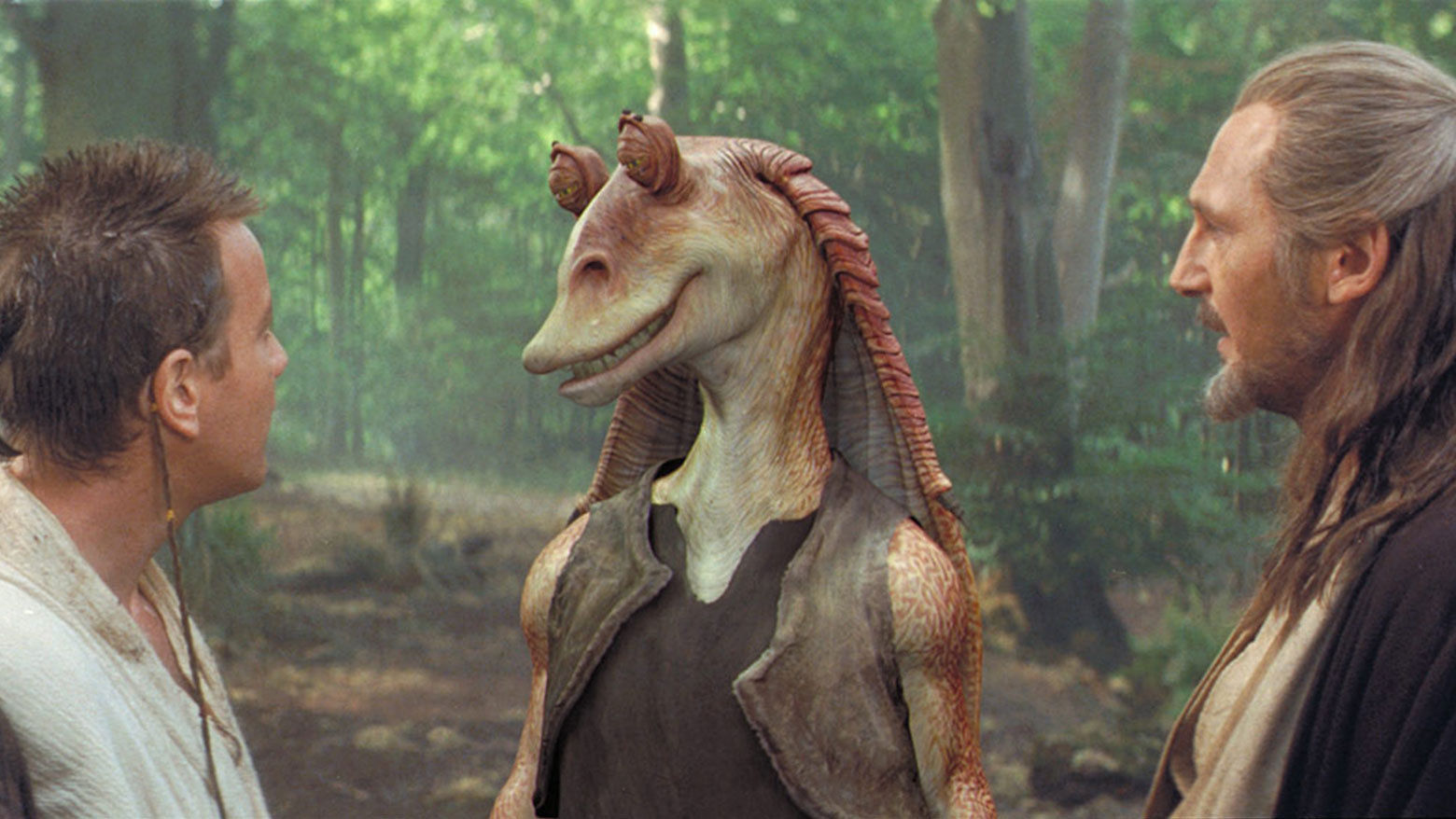
FILM NIGHT Podcast #11: Star Wars - Oh, Those Prequels


Do Jar-Jar and company Taking a second Lucas?

In episode eleven of the hit podcast FILM NIGHT, listen to Paul Donnett (writer, film instructor, composer), Paul Jensen (writer, film instructor, scholar), Nick Carey (writer, producer) and Ian Hanlin (voice actor) duel the fates out of Menace, Clones, and Sith!

Check it out here.

January 6, 2016

FILM NIGHT Podcast #10: Star Wars - The Force Awakens!

Is the Force strong with JJ Abrams? Let's just say we have a GOOD feeling about this!

In episode ten of the hit podcast FILM NIGHT, listen to Paul Donnett (writer, film instructor, composer), Paul Jensen (writer, film instructor, scholar), Nick Carey (writer, producer) and Ian Hanlin (voice actor) go full, drooling Jedi on the mega-anticipated blockbuster of 2015!

Check it out here.