Pages

February 26, 2012

The Big Question: Film or TV?


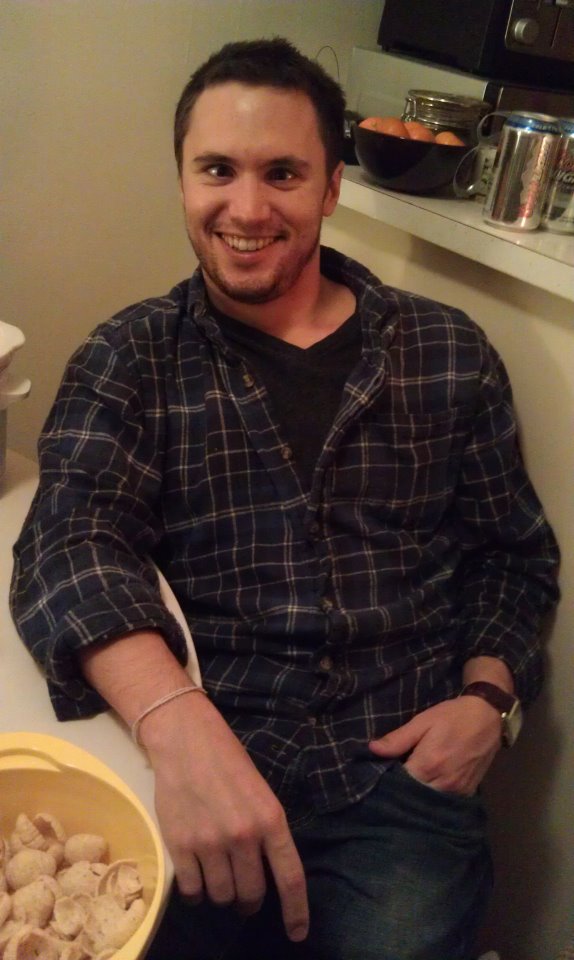
Ivan & Mike @ the unofficial End-of-Term-3 Partay! (Feb 25)
Two weeks before the end of term 3, department head, Michael Baser, and trusty sidekick Dionne rustled us into the writing theatre, closed the door, and asked us a question we all knew was coming: "Film or television?"

No, not which did we prefer to watch that afternoon, but rather, after six months of general exposure to both, which of the two streams did we want to specialize in for the remainder of the year?

Some of us (myself included) had been agonizing for weeks over this one. On the one hand, it didn't seem fair that we had to choose; on the other hand, it made perfect sense. To get really good, we had to zero in and become a master of one. Ask any five teachers to sell you on the benefits of either (a ritual I strongly recommend), and you'll, of course, get different answers. Some championed film with bells and whistles, others pointed to TV as the no-brainer, hands-down way to go.

Evan & Matt
For some of us, there was no debate or inner turmoil: we knew already. The challenge for me was that I'd come in to VFS with my heart set on film. That's where my experience, interest and, most importantly, my heart was.

But over the course of three terms, I'd come to love television writing and the frenetic pace and fury of the writer's room - the instant feedback, the constant workshopping, the all-heads-together generation of ideas. As I presented my dilemma to my instructors and fellow students, the question often came back, "Do you prefer writing alone or as part of a group?" - suggesting that loners belonged in film, extroverts in TV. Though an admitted generalization, it wasn't a bad point. However, I was equally comfortable working alone or with others. So that wasn't my issue.

Mel & Kate
The next question that came back was, "Which medium do you want to pursue as a career?" For me, that was also easy. Film. But based on the course outlines I saw coming for both streams, I felt I had more to gain academically (script formatting, how the industry works, etc.) by chasing after the TV curriculum. Plus, from everything I'd been hearing, chances were my first jobs after VFS would be in TV, if only as a production assistant. One more check in the box for TV.
"Eyeballs" Elberson

Then I had a few questions for myself, that applied uniquely to me. How does being 41 with three kids factor in?  Not unimportant details. I mean, I knew this going into the program and the future's still very bright, but there's no denying that I'm limited in some ways that other students aren't. Bills to pay, mouths to feed, perceptions to fight. And hey, I'm totally cool with that. I get it. Nonetheless, TV comedy, say, is probably not an option. (Apparently the industry doesn't have much use for comedy writers over 27. Not "hip" or "fresh" enough. Yeah, I know, but that's just the way it works. Besides, I intend to help prove that little bit of bullshit untrue in my own way down the road. . .)

In the end, I reconciled my heart with reality and opted for television. It just makes sense. But that doesn't mean I`ve changed my mind about wanting to write for film. I fully intend on exhausting myself with every film elective I can squeeze into my schedule, continue working on my feature script, and scheduling mentoring sessions with first-rate film gurus like Rudy Thauberger and Rodger Cove.

And of course, either way, we're not making career decisions here. We're just focusing on a study path while in school. The future is still ours to carve out, as always. Nothing's in stone.

Here we come, Term 4!

Half-Way There! (Milestones To-Date)

First Screenplay (1st draft) - "Can We Meet?"
Half-way through my program at VFS, and already a whack of milestones (both personal and school-based) achieved!

Goals I've dreamed about nailing for years. Who knew that all I needed was a little academic structure, professional encouragement, friendly competition and deadlines to make it happen?

Okay, we all knew that. Here's to you, VFS. Never could have done it without you!

Milestones hit so far:

1. Feature screenplay (1st draft) - "Can We Meet?"

2. TV spec script (1st draft) - Big Bang Theory

3. 2 comedy sketches - "Orphuk the Omnisicient", "Freddy & Hank's Day Out" (Produced/performed live)

First TV spec script (1st draft) - Big Bang Theory
4. Animated spec script (1st draft) - Kid vs. Kat

5. Original animated series concept - "Street Bosses"

6. 2 short stories - "Howard", "A Date Interrupted"

7. 2 short scripts - "From the Bench", "Enveloped"

8. 5 short scripts for "Alice in Wasteland" - VFS Compendium VI (Unproduced, but completed!)

9. Short script - "Double Booked" (produced by Christian Acosta. In pre-production)

10. Original song - "Little Mozambique" for ASEM infographic (produced by Saadi Alkouatli)

11. My YouTube channel! - started January 19, 2012 (597 views a/o Feb. 26)

Watch out, Term 4 - here we come!


February 21, 2012

We Are Magicians!

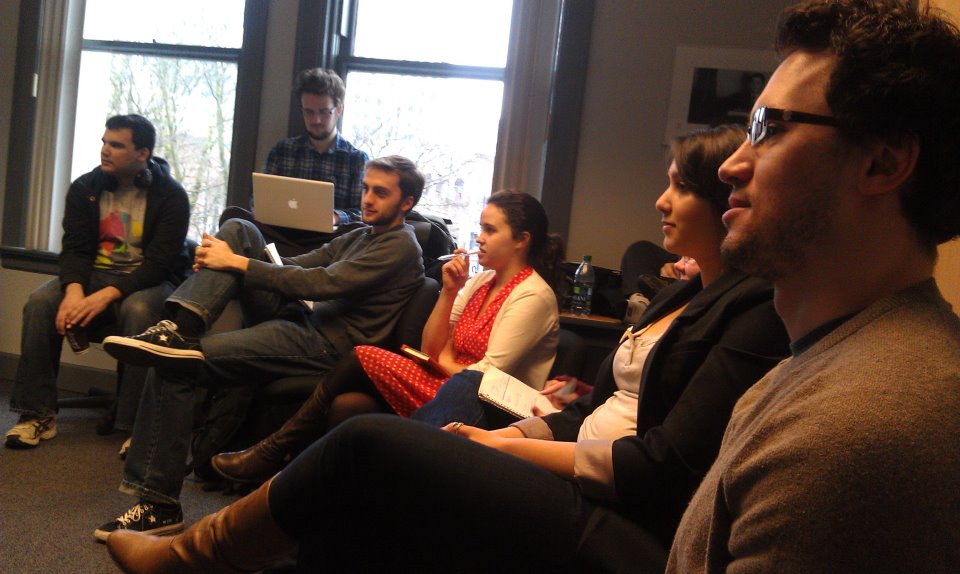
Term 3 Sketch Comedy class
Who knows precisely why a particular chord in a song, or scene in film, or passage in a book moves a person to tears? Or outrage? Or sober reflection? Or laughter?

We can analyze it, break it down, map out patterns, build lists of rules, construct rules of usage and principles of composition, draw circles around plausible motivations, and deduce psychological processes. That's all fine and good, and for professionals, also necessary. But whatever the magic recipe, the fact is that any time we create something that evokes a certain emotion, we're performing a bit of magic. And I find that very cool!
On the set of "The Flowers"
(VFS Compendium VI)

The old schoolyard self-help chant, "sticks and stones may break my bones, but names will never hurt me" may offer some small comfort at the time, but in the end, we all know it's bullshit. Words can create pain that hits much deeper and lasts way longer. But they can also turn the worst day of our lives into a rebirth. They can drive a person to suicide or inspire that same person to a rediscovery of life's true beauty and purpose. (Or at the very least, lighten the mood!) That's why history's brutes and bone-breakers love to ban books and squelch free speech; they know nothing is as powerful as a word - spoken or printed - that stirs a person's soul, changes a mind, re-directs a life.

The same is true for music. Or painting. Or theatre. Or film. In a nutshell, art. That's the power we have, we writers and poets, musicians and filmmakers, sculptors and painters. That's not smug or presumptuous; it's a fact. So while wielding our magic wisely, let's be proud of this thing we do and, above all, HAVE SOME FUN!

January 31, 2012

VFS Progress Report #3: Term Three!

My brain is soup.  

I've never done so much writing in my life, all at once. And these teachers, they’re relentless!  Every week they’re asking me, “Have you finished your pages? Are you quality-checking your formatting? Have you prepared your feedback for your fellow writers?” I mean, who do these people think they are??  (Oh, wait a tick, I paid them twenty grand to do that. My bad.)

If VFS (and, I'm assuming, any decent film school) could be compared to horseback riding, it would go something like this: 
  • Term 1 was a two-month long walk around the acreage, learning the names and personalities of all the "horses" in the stable (i.e. writing fundamentals like genre studies, style, dialogue, character, pitch, etc). 
  • Term 2 was our time to pick our favourite story ideas, then wash ‘em (build outlines), groom ‘em (write beat sheets), and saddle ‘em up (workshop in groups).
  • Term 3, apparently, is when we put our boots in the stirrups, yell giddy up and realize there’s still a lot to learn about riding one of these things, all the while hoping to hell we don't fall off!  

But we’re on the move, and that's what matters. Writing, collaborating, workshopping, sweating profusely, hoping we're good enough, realizing we're not yet, making peace with that, and pushing forward in our quest to become professionals. Above all, we’re learning how to stay on top of our horse, even when it sometimes becomes a nerve-wracking, sleep-depriving pain in the ass! (Which is still an infinitely better place to be than at home in our basements, dreaming of how great it would be to be a writer someday, one day.)

Term 3 curriculum: 

1) Complete 1 full feature screenplay (first draft, beginning to end), to be workshopped in group and summarily beaten up, massaged, ripped apart, re-assembled and made as perfect as possible.
2) Complete 1 TV spec script (first draft, beginning to end) to be similarly assaulted, twisted and polished.
3) Comedy sketches - Scripts based around comedic situations, comic characters, the "rule of 3", etc.
4) Other regular class assignments

My various antidotes, vitamin pills:
  • An amazingly patient, creative, enthusiastic (and ssssexy!) wife
  • Yoga
  • This blog
  • Great friends and colleagues
  • A mini-fridge full of beer and Riesling at all times
  • And a pocket full o' dreams
Paying Attention to What's Not on the Curriculum

It's what not on the curriculum, though, that really deserves special attention.  I'm talking about those flyers on the walls of your department floor, those emails, those hints and whispers in the air of imminent collaborations, seminars and projects. Those informal opportunities we'll probably never get again to work with other students and departments, as well as on projects and with filmmakers outside of VFS.  I'm talking about those things that no one will necessarily tell you about from the front of a classroom, and which you'll never know about unless it happens to show up on the wall, in your inbox or in lunchroom conversation. 

It might seem unfair that such opportunities aren't formally announced, but guess what? That's the way it works in the real world! Hollywood doesn't come to you because they heard what a wonderful and funny and gifted artist you are. Like it or not, it's our job to look, to investigate, to vigilantly pursue those opportunities, to constantly put ourselves out there, make ourselves known and available, and basically never say no unless there's a really, really good reason.  

Everything else pretty much chalks up to hard work, ability and passion. I mean, how badly do you want to tell stories and make movies? That's the bottom line: what are you really passionate about, and what are you willing to do to acquire it? 

Trust me, the older you get, the more everything else doesn't matter more than that.


December 22, 2011

Christmas with the Kids

Always in the background of our experience at Vancouver Film School is the fact that my kids are a thousand miles away.  Seems like just yesterday we were all saying goodbye, Christmas feeling like an eternity into the future.

Then, boom: four and a half months have passed, we're on a plane back to Calgary, and I'm wondering where the time went!

It hasn't exactly been a pleasure cruise for any of us, being apart this way.  There have been a lot of goofy Skype sessions, long-distance phone updates, emotional texts, and even a few angry Facebook inbox messages.  Yet we've managed to collectively keep the communication alive and the relationships tight.

James is paving a brilliant future for himself, both at school (Mr. Sovan's assistant in the kitchen) and in his new job (chef's assistant @ Chopstix).

Jenni is establishing herself as an independent working woman with wicked business sense (@ Amato Gelato).

And Ricky is killing it at school, nailing great grades and carrying himself with a confidence, kind heart, and sense of humour that makes this guy one proud papa.

In our many conversations over the past few months, it's been exciting to hear about their experiences at school, at home, with friends, and now with their first official jobs.  Books read, music discovered, friends helped, spelling bees entered, milestones achieved.  They call and ask for help on their resumes.  Now they're telling me about the people they work with.  Now they're telling me about the latest shenanigans with their buds. And underneath it all, the unmistakable sound of them growing up, coming into their own, taking responsibility for their futures, and having fun doing it.  What more could a parent want?  I don't know if they'll ever realize how proud they make me, but I think they get the idea.  Simply put, they frickin' amaze me.  Anybody would be lucky to have kids like these!

Day 1 - We land at the Calgary airport on the night of December 15, where Jenni and the ever-hospitable Brandi Flynn meet us.  Long, four-month-in-waiting hugs (and a couple of tears) abound.  In the back seat I put my arm around Jen and hear all the latest news.  She's even more beautiful than the last time I saw her, if that's possible, and I soak up every word.  Back at Brandi and Steve's place, James and Ricky are firmly ensconced in a couch playing Modern Warfare 3.  I expected nothing less.  More hugs and kisses, and this early Christmas weekend has officially begun.


Day 2 - After a busy day of movies, more games, and general tomfoolery, I pick up a rental car and Jenni and I make our way to the Olive Garden, one of our fave spots.  She has bruschetta, I have a chicken caesar salad.  We top it off with a ridiculously tasty chocolate cheesecake filled with mousse and topped with chocolate chips, et cetera, et cetera.  Full of sugar, we make up for lost time, talking about everything from music to love to drugs and other things - you know, typically father/daughter chit chat. It's wonderful. Neither of us wants it to end.  So we stretch it out and go mall hopping before heading back home, singing and laughing all the way.  A truly magical night!  After the kids go to bed, Mel and I disappear for some last minute shopping and are up till three a.m. wrapping presents.  Tomorrow morning will be our own personal Christmas.

Day 3 ("Christmas") - As per tradition, the kids are up before we are. Bleary-eyed, we make our way to the living room and the ceremonies begin!  It's chocolate!  It's a book!  It's a movie!  It's make-up!  It's more chocolate!  Grandad arrives just in time and more presents are opened.  Guitars come out and are played. It's a ton of laughter and bally-hoo.  And then, it's a nap.  Z-z-z-z-z-z-z.  And then we're off to Aunt Stacey's for Turkey dinner.  She goes waaaay out of her way to make sure everyone is warmly welcomed, entertained and summarily stuffed.  We cap the night with a two-hour game of charades before slipping into tryptophan- and laughter-induced comas for the night.  

Day 4 - From Stacey's, we head off to Indigo Books at the Cross Iron Mills mall where each of the kids has $33.33 to spend, care of Aunty Barb.  Six books later, Jenni and Ricky disappear with Mel to visit Tara and Randy in Airdrie, while Grandad, James and I make our way to A&W for burgers, root beer and a deeply political discussion about the future of Western civilization.  You know, standard guys-out convo.  It's great to get this time with James, and having Grandad is a wicked bonus!  Then it's back to Tara's to play some game I've never seen before that tests our ability to dance and willingness to completely embarrass ourselves.  (I take enough pictures to implicate everyone.)  Grandad says his goodbyes and we wish him a safe trip back to Edmonton.  En route back to Calgary, we all stop at Jenni's new place of work (Amato Gelato) before Ricky and I separate for our one-on-one time at Petland.  Twenty budgies, one cat and several fish later, we head to Future Shop where Ricky drops some of his Christmas money on the latest "Harry Potter" Blu-Ray.  He's a little short (financially, I mean) and I slip him five bucks to complete the sale.  He offers a back massage as repayment.  And that's why we have kids!

Day 5 - Our plane doesn't leave till three so we pack in as much as we can together.  Gathering our wares from Brandi's basement, we travel back to Airdrie where we watch Ricky compete in his school spelling bee, take a tour of the Bert Church High School kitchen where James proudly works, and then jet to Amato Gelato one more time to finally sample the seventy thousand or so flavours they have there.  Mmm mmm good!  Then, wishing it wasn't so, we drive the kids back home and say our goodbyes.  It's been a truly spectacular weekend, more full and fun than we'd even imagined!

Let's be honest, none of us like the fact that we're not living in the same town.  This was always going to feel weird, no matter how good the reasons.  But as a wise friend who's been through this himself once told me would happen, we've found a way to make it work.  Bottom line: if the love is there and the relationships are strong, time and geography don't have to change that.  So long as they're nurtured in the spaces between, family bonds and true friendships never fade.  If anything, in some ways, they get stronger.

I can't wait to be close to them again.  But in the meantime, as this Christmas proved, we're never really that far away in our hearts.  Turns out, the best cliches are true!

November 25, 2011

VFS Progress Report #2: The First Three Months

Four days shy of month three.

In some ways, the time seems to have passed by like a Japanese bullet train at rush hour, just like some said it would.  In other ways, it feels like the days and weeks have followed one another at a pace that my sage grandmother, when discussing the passage of time in her own life at 87, called "just right".

If time is, at least in part, a measuring stick of what we have and haven't accomplished in life, VFS has helped us make extraordinarily good use of it.  On Orientation day (August 22), I blogged my strong belief that VFS couldn't be expected to work miracles, that I had to grab every opportunity to write or network when it strolled by, and that ultimately, my VFS experience would be as good as I made it.

Was I right? Here's how it has gone down so far:

1. "VFS can't be expected to work miracles." 
By miracles, I mean the magical ability to turn me into a brilliant, award-winning writer, or the bestowal of a long, satisfying career upon completion of my program.  No school has that kind of power and no one at VFS ever pretended it did.  Having said that, I've been blown away by what VFS has managed to pull off so far.  Time and experience have clearly helped the departmental powers that be to build a solid, low-fat, high-output program.  Compressing a two-year program into one, we're definitely stretched, but it never feels like too much, partly because all the classes fit together in such a clearly integrated, "wax-on-wax-off" kind of way, and partly because the assignments are just so much darned fun and targeted to help us build a kick-ass portfolio. 

Plus, the instructors are ridiculously invested in students.  And let's be honest, they could easily half-mile it if they wanted to.  These are successful, busy writers in their own right - i.e. they've got shit to do.  A few nods here and there wrapped in feigned interest might pass with a good number of students.  But this crew steadfastly refuses to take the easy way out.  No matter how many story ideas or pitches they listen to, no matter how many synopses, outlines, beat sheets, or scripts they read, they keep coming to class and workshop fresh and as committed to our work as we are.  I've been to two universities and half a dozen other post-secondary programs, and I've never seen instructors go above and beyond like this.

And I haven't even talked about the constant stream of mentorships, guest speakers, contests and events VFS offers, none of it window dressing.  If we don't walk out of here significantly better (and better-connected) writers than when we came, it's won't be VFS's fault.  So miracles, no.  Ridiculous opportunity and development - hell, ya!

2. "I have to grab every opportunity to write and network that comes my way."
The great thing about having theoretically lived half my life already is that I've discovered how rare certain opportunities tend to be.  I mean, when else am I going to spend a full year surrounded by other writers, story editors, and writing mentors, many of whom have been writing successfully for years and are actively connected to industry - all freely and constantly available to talk and workshop with, give feedback, and help me build my chops and confidence?  When else am I going to be able to write all day long, month after month, building skill and a body of work, free from the encumbrances of "normal life"?  When else am I going to get to collaborate not only with other writers, but with directors, producers, visual and sound designers, and actors on projects with virtually no creative limitations, in an environment designed to help us make our cinematic dreams come true?  The correct answer is, "Probably never".

So I decided from the beginning to keep my ears and eyes open to every email, poster, or whisper in the wind announcing that an opportunity to write or collaborate was near, and then jump on it in a full-body choke-hold.  Whether it's VFS's regular Compendium production, private student productions, open pitch sessions, opportunities to hear and meet guest speakers (regardless of the department hosting them), regularly-offered elective classes or chances to score music, I'm on it.

Yes, I am trying to be a hero: the hero of my own life, thank you very much, Mr. Campbell! I paid twenty grand to be here and it's all I've ever wanted to do!  I'm going to miss out on a chance to get better and meet the right people because I'm a little tired?  Somebody call a wahmbulance, but not for me.  It's for the guy sitting next to me who plans on crying into his beer ten years from now, whining about what "could have been".    

J.J. Abrams' new series, "Alcatraz", in production outside VFS
3. "Ultimately, my VFS experience will be as good as I make it."
To succeed at VFS, paying attention, building relationships, and meeting deadlines are critical.  Early on, I developed tools and a process that would streamline everything, from plot and beat sheet creation to character development to pitching. No point in re-inventing the wheel with each assignment. 

At the start of each term, I've clarified the objectives and outcomes of each class to avoid getting lost in a sea of "to-dos" and to make sure assignments get to teachers on time. 

And there's no replacement for building strong, genuine, relatively ego-free relationships with everybody.  And by everybody, I mean everybody - students, teachers, people from different departments, guests, and the lady who cleans the bathroom.  I don't think I need to explain why that's so important.

Beyond those chestnuts, it's about quality and volume.  Generating a lot of ideas, throwing them against the wall to see which ones stick, and then producing like a freakin' rabbit.  "Write well, write lots," has become my mantra.  Lucky for us, VFS throws us so many assignments, we couldn't end the year with a meagre portfolio if we tried.  To date, between class assignments and extracurricular projects, I've completed or am working on:
  1. Four feature screenplay outlines, one in development ("Can We Meet?", "Full Circle", "World On Fire", "Early Retirement")
  2. One original short screenplay ("From the Bench")
  3. One adapted short screenplay ("Enveloped", based on a story by fellow student Nicole Jerick)
  4. One TV spec teleplay ("Big Bang Theory")
  5. One animated spec teleplay ("Kid vs. Kat")
  6. One original animated series treatment ("Street Bosses")
  7. Two short stories ("Howard", "A Date Interrupted")
  8. Five VFS Compendium short screenplays ("The T Party", "Beating the Beast", Split Decision", "Facing the Queen", "The Garden of Eaten")
  9. One original short screenplay for a student film (in production)
  10. A second original short screenplay for a student film (in development)
That's fourteen working concepts or finished products in less than three months.  And I was worried about whether I'd come out of VFS with enough on my resume.  But we've all got a story like that.  All of us are going to walk out of here with a suitcase full of surprises when we're done. How many suprises, and how well they help set us up for the future, is our call.

November 4, 2011

Tatchell & Jennewein Inspire Screenwriters


Guest post originally published on Vancouver Film School's Blog (Friday, November 4, 2011)

During the recent Writing for Film & Television Two-Weekend Intensive, VFS played host to two special guest speakers: alumna/Oscar nominee Terri Tatchell and Advisory Board member Jim Jennewein.  

The Two-Weekend Intensive was a chance for aspiring screenwriters to experience a barrage of screenwriting tools, techniques, and exercises.  Some attendees responded by saying “the instructors are wonderful” and that it “exceeded every possible expectation”.  We hope the weekends were the beginning of something much bigger for everyone involved. 

Guest Post by Paul Donnett

Even for students who’ve mortgaged an arm and a leg to come to Vancouver Film School, stuffing a Friday night with one more teacher, not matter how “wafer thin”, can be a tough sell.

Just ask writing department head Michael Baser, who could be found at any given time peeking around corners and classroom doors like Kilroy on the days that Hollywood screenwriter Jim Jennewein (October 21) and District 9 co-writer Terri Tatchell (October 28) came to town, inviting us to attend if at all possible.  I mean, honestly, what could these two tell us that we hadn’t already heard, in one class or another, every day since orientation?

But good speakers aren’t stupid, and neither (usually) are the ones that invite them.  (You’re welcome, Michael.)  Speaking plainly about some of the challenges writers face in the film industry, from writing high concept comedy that sells to navigating the Hollywood food chain just to get a script read, Mr. Jennewein clearly understood how to make his Friday night presentation worth our time.  With writing credits that include Major League 2, The Flintstones, and Richie Rich, Jennewein briefly reviewed the basics of story writing before moving into a dynamic discussion of the rules of comedy, why some comedies work and others don’t, and the importance of getting inside the heads and hearts of our audiences.

Academy Award nominee Terri Tatchell brought a profoundly human vibe to a presentation that was less lecture than conversation, this one with teacher Kat Montagu in an engaging exchange straight out of Inside the Actors Studio.  Opening up on the real-life balancing act of writer as parent, Tatchell also talked about projects past, present and future, including the upcoming adaptation of Amanda Hocking’s Trylle Trilogy and the full-length feature Chappie, currently in development with husband (and 3D Animation & Visual Effects grad) Neil Blomkamp (Elysium).

In her disarmingly down-to-earth manner, she somehow managed to make the ego-crushing work of writing and film production feel not only doable, but eminently worth it.  It was like sitting and having coffee with an old friend.  An old friend with an Oscar nod and a loft on Granville Island.  Sigh.  One day. 

In both cases, Jennewein’s and Tatchell’s, it wasn’t their information so much as their inspiration that made coming out worth it.  Even if we had heard some of it before (and we had), it was still hugely motivating to hear a fresh spin coming from experience in a world we’re all training madly to enter, while being encouraged to respect the needs and demands of our own humanity.  Next time a speaker comes to town, go if you can, even if you think it’s just “more of the same”.  There’s a good chance it won’t be, and you never know what lights might get turned on in the process!

October 20, 2011

Winner - 8th Place, Writer's Digest 80th Annual Writing Competition (TV & Movie Scripts)


Click here for list of winners.

I just got word that I came in 8th place in the Writer`s Digest 80th Annual Writing Competition (TV & movie script category), for my original script, "Spare Change".  

It was my first crack at writing a script and, because I only learned about the contest four days before the deadline, I had to work fast.  (These days, that just sounds like a typical week at VFS!)  So this is very cool, and I'm very honoured!  Sounds like names of top winners in all ten categories (including fiction, poetry, stage play, and others) will be published in the November edition of Writer's Digest.

To all you aspiring writers out there, if you haven't heard of WD magazine or their annual competition, check it out online here.  They also have several other major writing competitions throughout the year, as well as a heap of writing resources (such as the annual and indispensable Writer's Market family of directories).

It's definitely worth the click!

October 5, 2011

Life @ VFS: What I've Learned So Far (Episode 1)

Every day at VFS is an epiphany.  I'm not even kidding.  It's kind of ridiculous.

Just when I think I've jotted down that last great tip, morsel of wisdom or industry insight from one of my teachers - boom! - they fire off another one, just to prove they can.  I don`t think the big blue binder can take much more.

Don`t get me wrong, I love every minute of it.  I`ve dreamed of this for years and I pinch myself a couple of times a day.  But Moses never found revelation so exhausting.  Oy.  I'm going to need a sleep therapist to realign my biorhythms after the last six harrowing weeks of editorial all-nighters and beer-soaked pitch preps.

But that's another story.

So what are some of these big flashing lightbulbs?

1. I can't be a good writer in isolation, no matter how isolated my life as a writer may be.  
To become worthy of other people's attention or commercial successful, my writing needs the spit and polish of other people's perspectives and feedback, insights and questions, criticisms and encouragements, emotionally-satisfied smiles and incredulous, raised eyebrows.
At VFS, this input wears various faces: class discussion, pitching, workshopping, group exercises, teacher's comments, and informal conversation.  It's constant, unrelenting, and indispensable. In a very real sense, our tuition includes the cost of each other.  I learn as much from the students around me as I do from my teachers.
Had I stayed writing in my basement in Alberta, my work would be (and I'm approximating here) 10% as good as it is now.  I wouldn't be enjoying an environment that constantly sparks new and better story ideas, and my ego would be in disproportion to my ability.  As far as I'm concerned, the shoulder rubbing and spit-balling we do every day is worth whatever it took to get here.

2. For the love of God, don't become an auteur.
Have a vision.  Have a good idea.  Have a really, really good idea.  Have a lot of really, really good ideas!  Write compelling, juicy, commercially-strong stuff.  But categorically refuse to become "special" - i.e. an arrogant, unapproachable, defensive dick nobody wants to work with, no matter how awesome you are.  It's vocational suicide, as well as being really, really annoying.

3. Leave your ego at the door.
It's going to get checked, balanced, smashed, dissected, analyzed, stripped naked, pointed to and laughed at, crucified, resurrected, then laughed at again.  Okay, not really, but it may feel that way sometimes.  All depends on how big it was when we got here.  (I'm talking about your ego, Jeff, settle down.)  This is about becoming a better writer, not about satisfying a subconscious need to be thought of as clever and witty.  Let`s be honest, it takes a healthy ego to dare to write in the first place.  But don`t let it turn into a tumor.

4. Embrace criticism and enjoy the ride.
As it turns out, having other people scrutinize our ideas and values isn't nearly as painful or nerve-wracking as we thought it would be.  (Unless you're talking about Kelsey Kirvan's pitch class, in which case I retract my previous statement.)  Once you realize that workshops, mentoring sessions, and class feedback exist to make your writing stronger, crisper and more marketable (and I have yet to be the recipient of any of these where my writing didn't improve), you`re off to the races.  I'm already at the point where I look forward to having my ideas ripped apart and my bright ideas challenged, because I know that I and my stories will be the better for it.  

5. Love the baby, love the baby, love the baby . . .Kill the baby!
It sounds worse than it is.  Just means that while it's vital to be passionate about our ideas and committed to a story`s vision (how else could we keep plugging away day after day?), we also need to be able to admit when an idea or element just isn't working and be prepared to abandon it as unemotionally as possible, moving in whatever other direction makes more sense.

6. Let the freedom-loving artist in you shake hands with the savvy businessperson in you.  
Sure writing is a highly individual art, but it's also a career and a business where we tend to work with other people.  Therefore a few questions are in order: Am I going to marry every detail of my vision or story, unwilling to negotiate one jot or tittle with studios or co-writers?  Will I only write or work on material originated by moi?  Will I only agree to projects over which I have complete creative control (and by the way, good luck with that)?  Can I work with others who may have totally different, sometimes incompatible visions?  Can I stomach watching someone else take my work and twist it into something else completely?
Each of us will have to draw these lines for him- or herself, and invariably each time an idea or opportunity emerges.  Whatever the outcome, it's important to recognize and make peace with the fact that writing, like any other job or endeavor, will inevitably ask us to make some compromises.

7. Write everything down and constantly find better ways to get stuff done.
I keep a small stationary store with me at all times.  I know I look like a dork always writing shit down on sticky notes and pasting them all over my binder, but I`m sorry, I just have to.  I`m not smart enough to remember all the great stuff we get hurled at us throughout the day.  Besides, I paid a butt-load of money for these pearls and I'll be damned if I'm going to let them slip away just because I didn't feel like investing in a good clipboard.
Plus it helps me constantly refine the various processes involved in writing (plot outlines, character profiles, dialogue development, pitches, log lines) so I'm not reinventing the wheel every time we get an assignment.   I know I sound like a big nerd, but guess what?  That's how you get good, bitches!  (My guess is, that's also how you get rich.  Bazinga!)

October 3, 2011

My Worst Poem

Because screenplays and poems are close cousins (in terms of both format and economy of language), my first-term style teacher, Adam Warren, asked us to write a god-awful poem en route to coming up with a good one.  For what it's worth:

I Flung Myself At Her
by Paul Donnett

I flung myself at her like a dog in heat,
Like some sweet luncheon meat,
Like a field full of wheat.

And she opened her arms like a bright sunny day,
and the horses did bray
And the children did play
And the farmers made hay
And the real men turned gay.

And we rolled and we rolled
In a patch of pure gold,
Till we got really old
and started to mold.

Fin